By
By 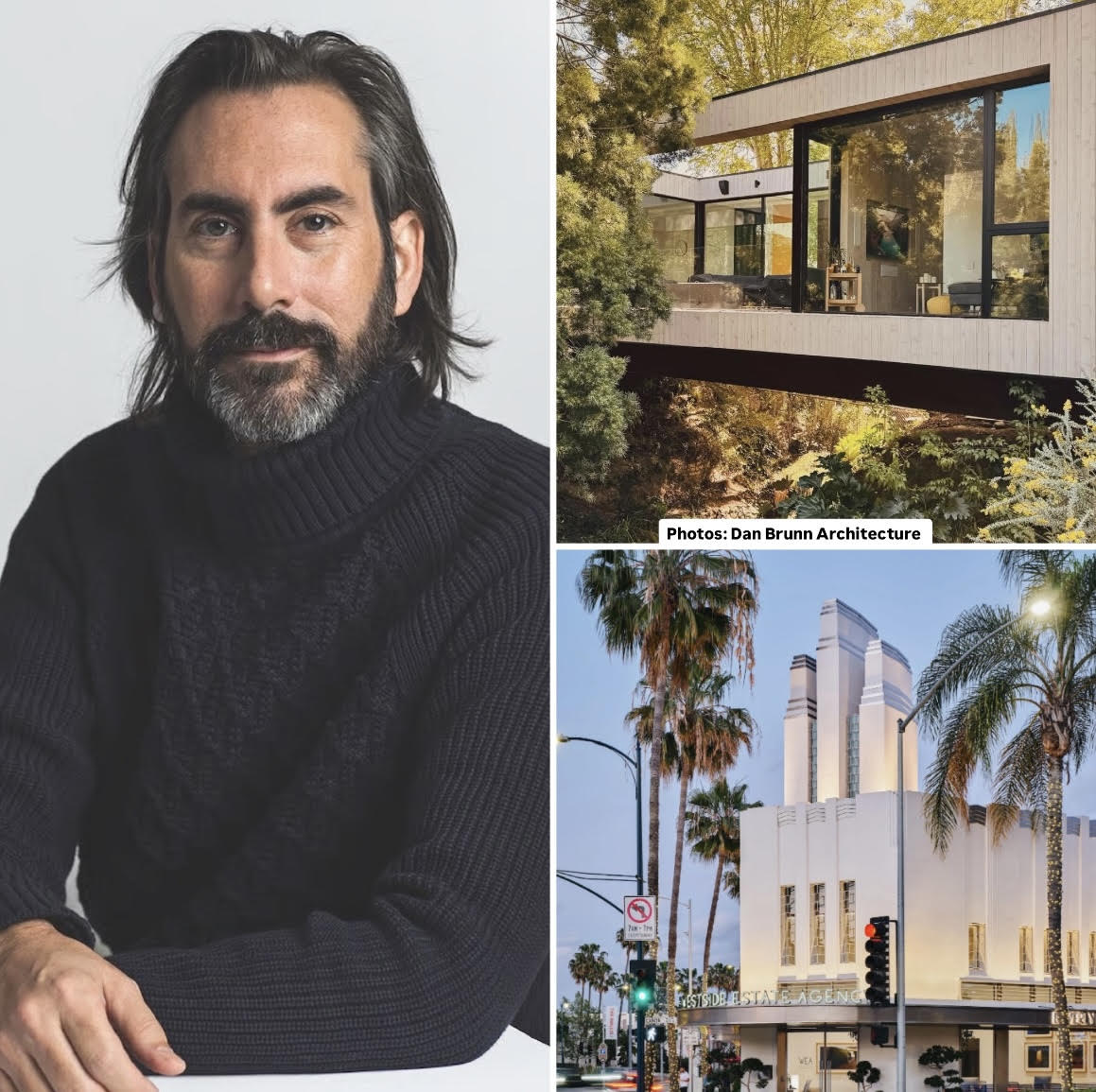
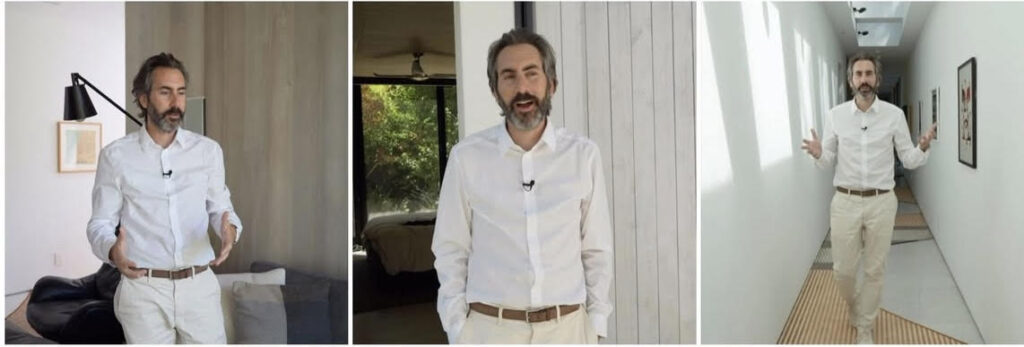
It’s been a while since my last post on LA Stories! A few months ago, I came across architect Dan Brunn on Open Space, a Youtube channel that tours historic houses and other architectural wonders.
Born in Tel Aviv, Dan moved to Los Angeles in 1987 at the age of seven. Dan did not speak English when he moved to LA, and the transition of going to a new school and making new friends was no easy feat. However, by taking architecture classes in school, alongside engineering and descriptive geometry classes, Dan found his true calling in creating and designing spaces that shaped the human experience. Music, cars, and LEGO bricks are three other childhood passions Dan still nurtures.
After honing his skills for five years at USC School of Architecture and interning in an office every summer, Dan went to Harvard Graduate School of Design. When he moved back to Los Angeles to become a licensed architect, he started working on his first commissioned projects while also teaching at his alma mater, USC.
In 2005, at just 29 years old, Dan founded his eponymous architecture firm, Dan Brunn Architecture.
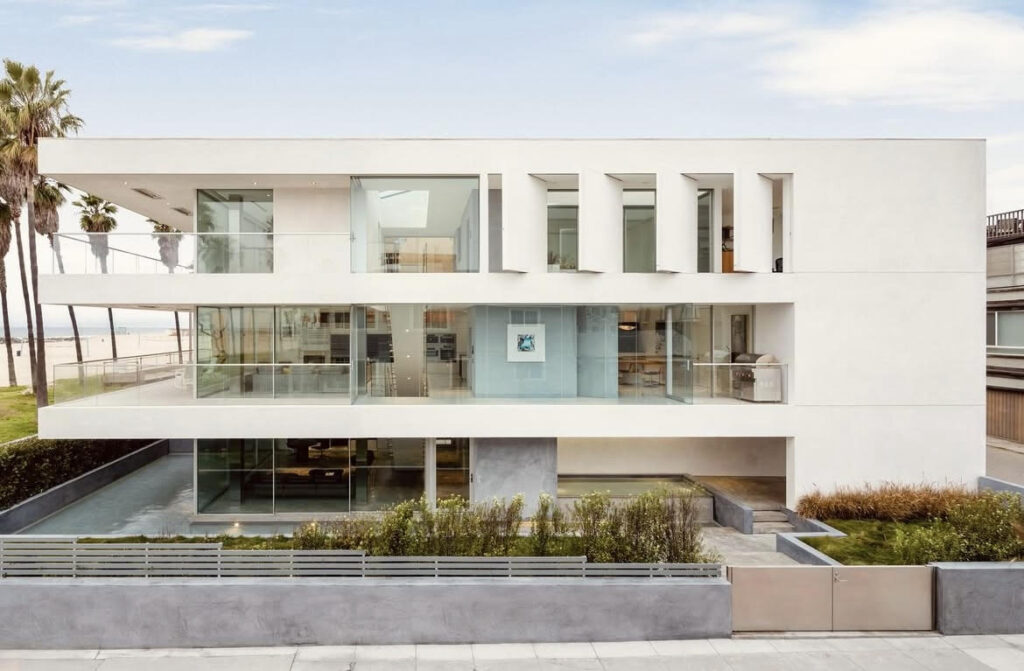
From a modern three-story beach house in Venice Beach to sleek boutique shops in West Hollywood’s Design District, Dan’s visions are informed by his Israeli roots. Tel Aviv has been coined ‘White City’ for having the largest number of Bauhaus buildings in the world. This architecture style, also known as International Style, is known for its cubic angles, smooth facades and open floor plans.
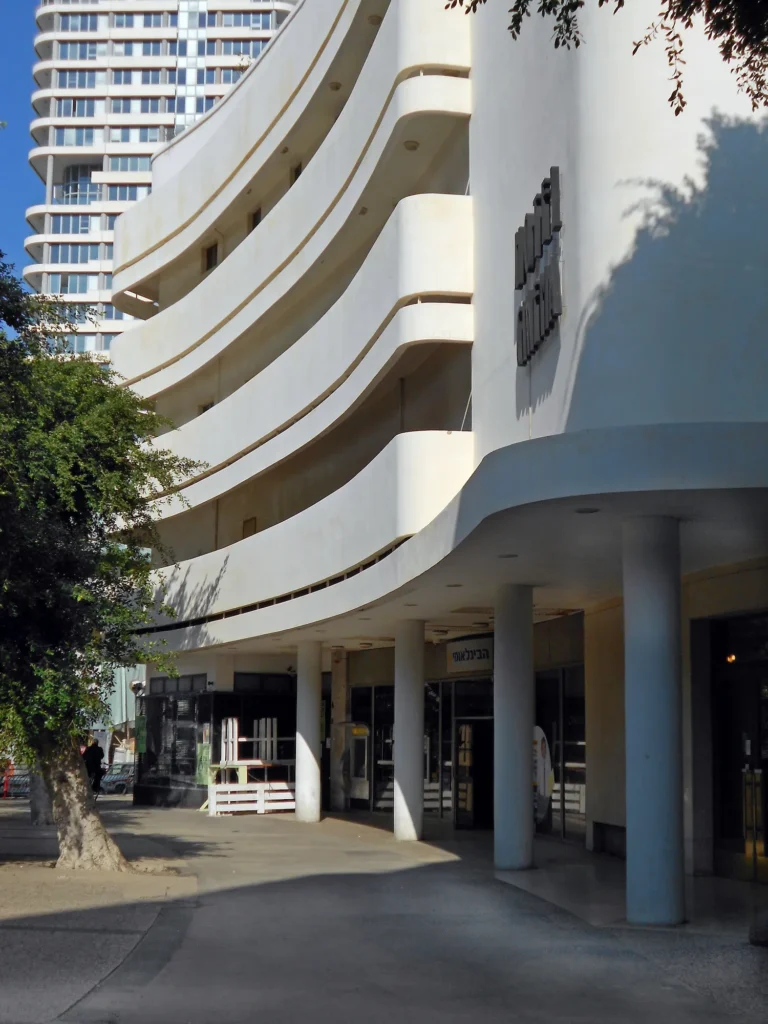
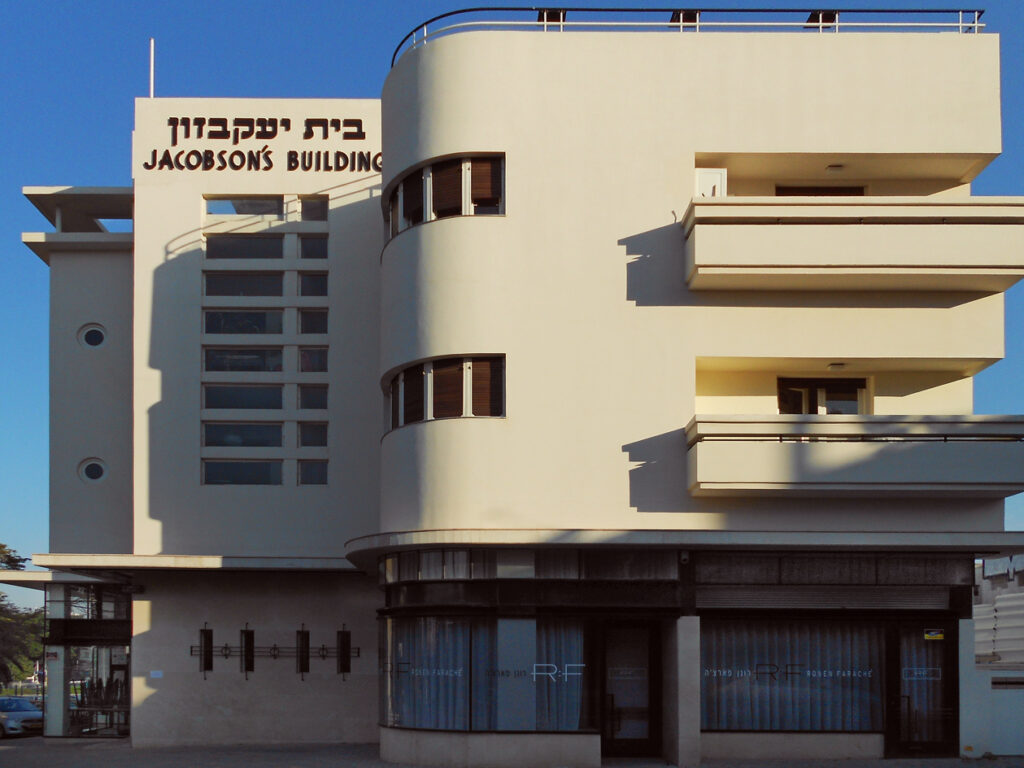
Today, Dan is one of the most renowned architects in Los Angeles thanks to his focus on minimalist innovative designs, and his meticulous emphasis on sustainability that enrich people’s daily lives. Celebrating its 20th anniversary this year, Dan Brunn Architecture has received a bevy of awards, nationally and around the world.
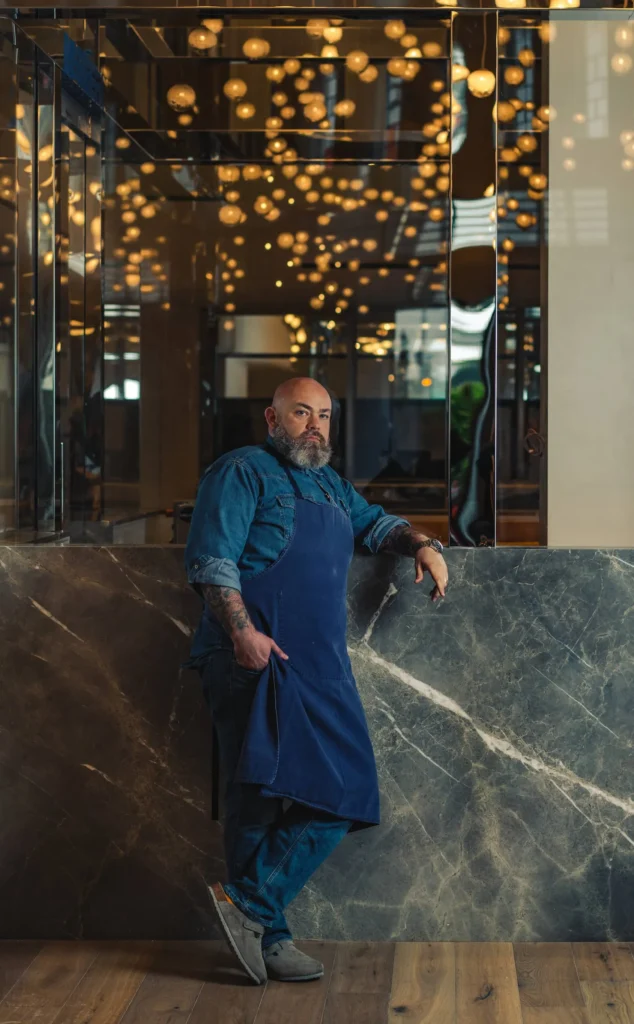
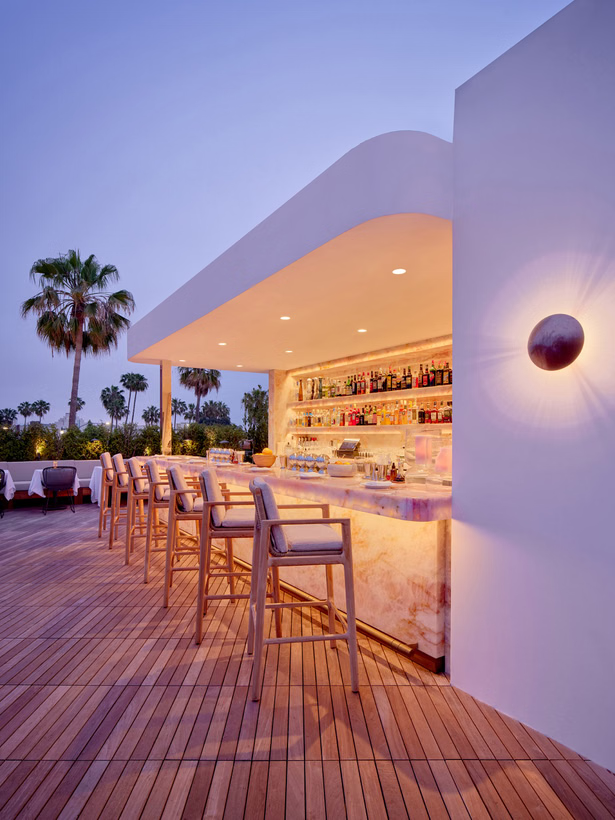
It turns out that I was already familiar with a few of Dan’s projects, like Funke — the best Italian restaurant in LA! Read my review HERE. I went with my dad the last week of December 2023. Seeing Chef Evan Funke hand-make pasta in a glass-enclosed 20-foot “pasta lab” with polished chrome railings was such an immersive experience. After indulging in dreamy pastas on a sumptuous red velvet banquette and under Murano glass light fixtures, our night continued on the gorgeous rooftop bar.
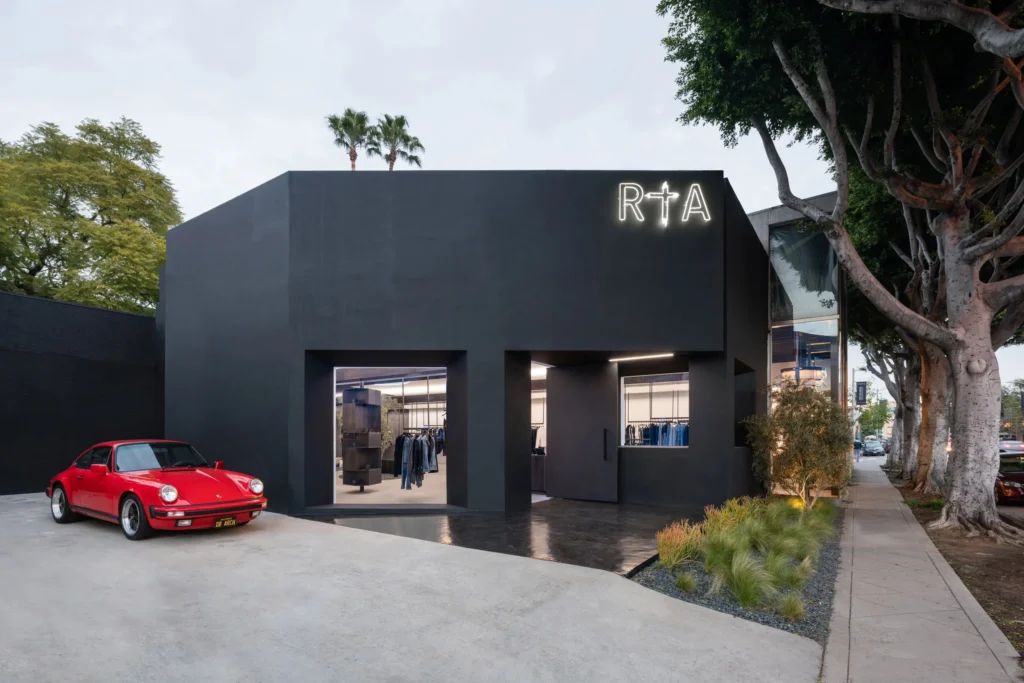
When I worked at the Pacific Design Center from 2017 until the end of 2019, I would walk by the now-closed luxury streetwear boutique RtA every day on my way to my car. It was hard to miss the striking black facade with its glowing brand logo.
Additionally, I’ve been to Coffee For Sasquatch on Melrose many times — a gleaming white minimalist oasis.
While Dan has an impressive repertoire of projects under his belt, the one that has caused the most media buzz is Bridge House, which racked up over 1M views on Open Space’s Youtube channel and was featured on nearly every architecture website. Construction began in early 2017 and finished at the end of 2019.
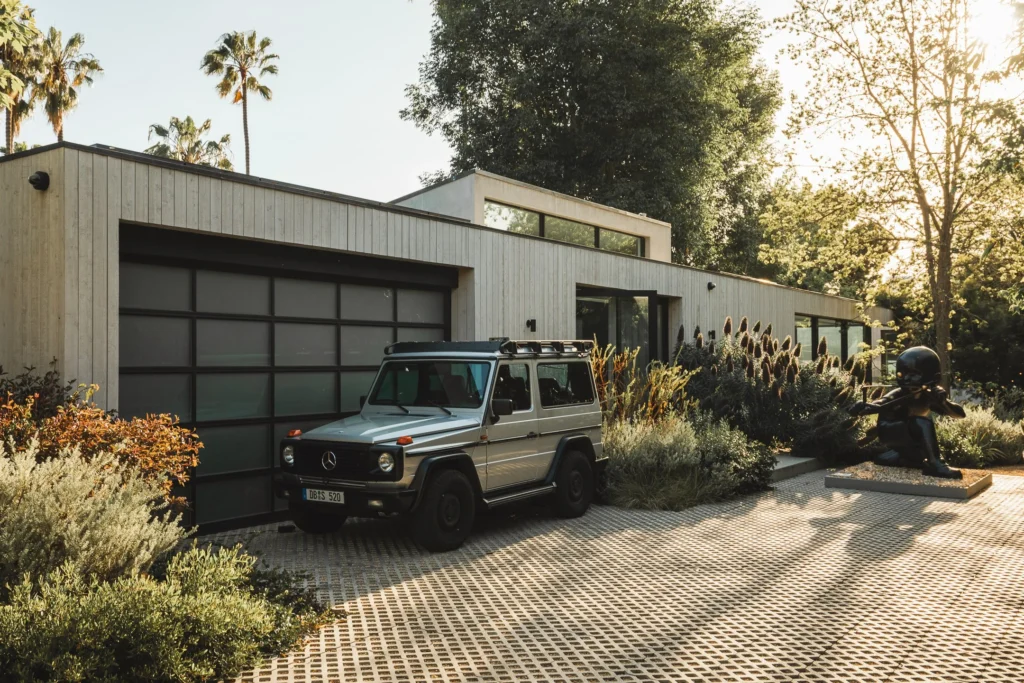
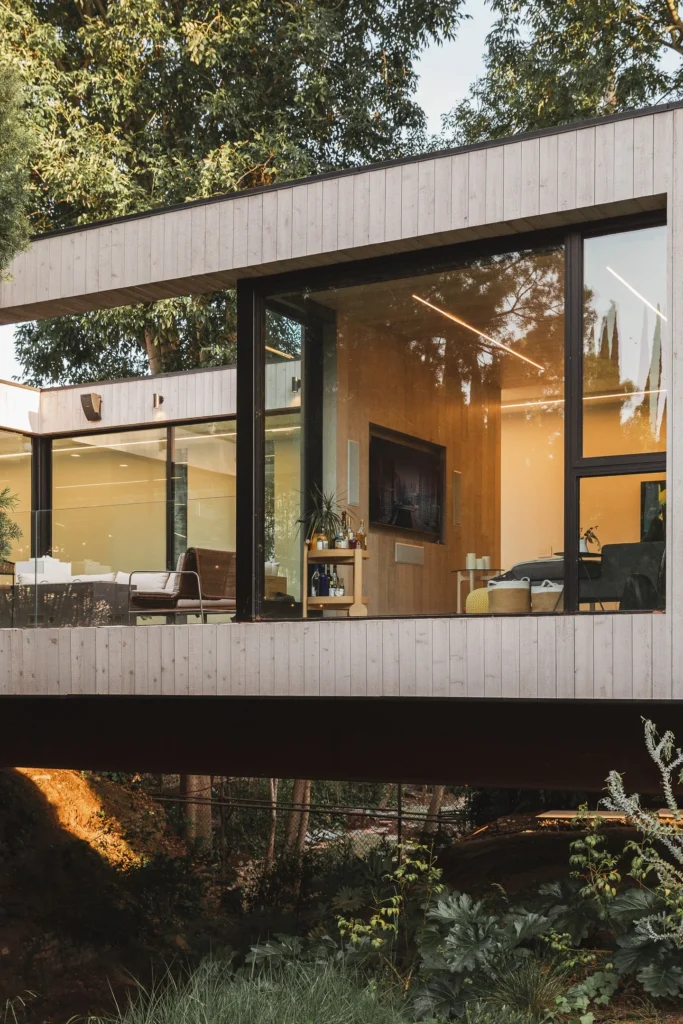
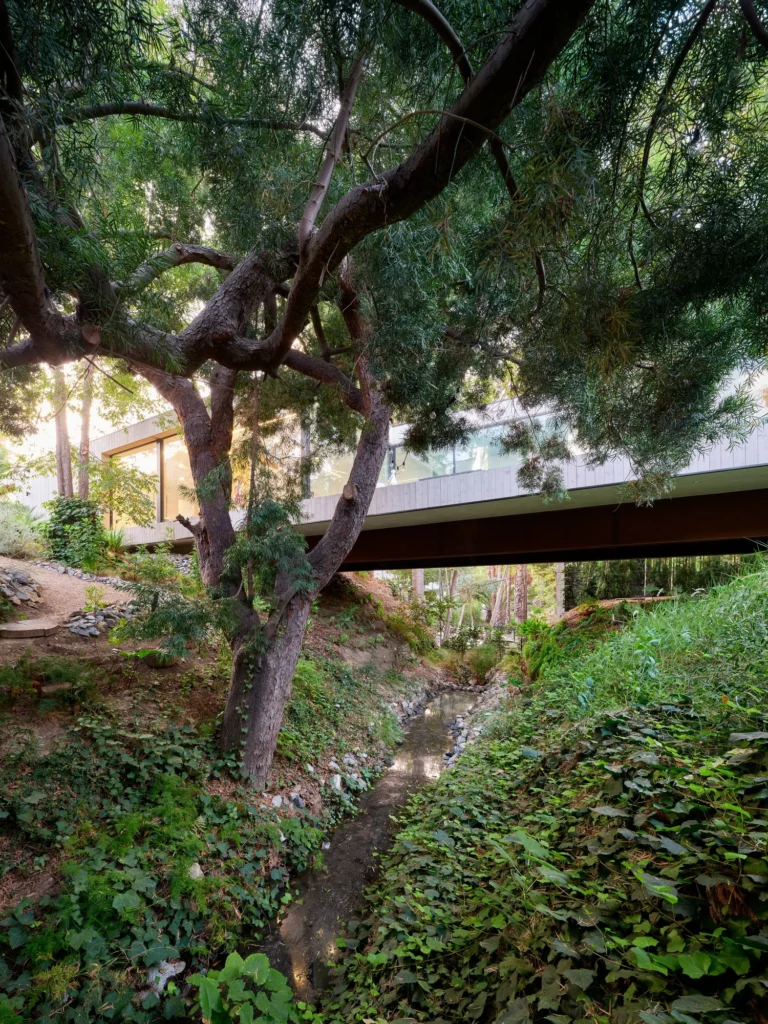
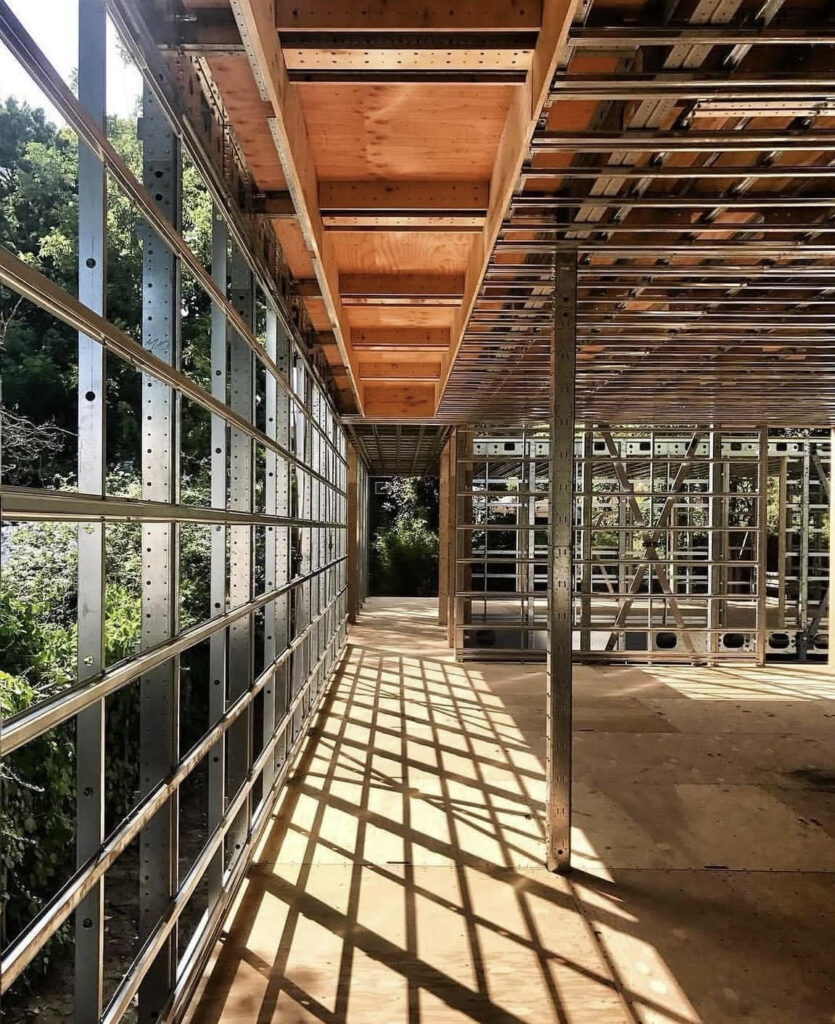
Located in a tiny pocket of Hancock Park called Brookside, the Bridge House is 210 feet long, 20 feet wide, and straddles 65 feet over a brook. The exterior – with muted cedar, black steel accents and floor-to-ceiling windows – blends harmoniously with the lush green surroundings. By the pictures, you would think that you’re anywhere other than smack dab in the middle of Los Angeles. The house embraces sustainability in every aspect: from the materials to the net-zero energy standards.
In this interview, we dive into Dan’s career, Bridge House, and the current landscape of Los Angeles, as well as his favorite places.
Hello Dan. How has your approach to taking risks changed since your very first project? Now you have a full team and more resources. Did you always have this level of self-confidence to pull off a project or was it something that you had to build over time?
This is a good question. I attribute this to my heritage of being Israeli. It’s a sink or swim mentality and it’s something I saw my dad do. You always say, “Yes! I can do it.” You’re not scared, and then you figure it out. A great example was really early on in my career when I worked on the first beach house. I was like, “of course I can do this. I’ve designed a house before!” Then, I was confronted with a three-story house, which I’d never done before. Funny enough, it’s a lot different than a two-story building: structurally, integrating systems, getting permits… I was like “Oh my God!”
So, I always lead with self-confidence to keep the project going. Do as much research as you can. Having said that, it becomes more treacherous and scarier to take these risks because when I started, I was working in an interior design showroom. Then, I started doing projects that were worth a lot more.
The stakes get higher
The stakes get higher and the complications are higher. It’s also a lot more difficult to get permits these days. I remember when I finished my first project, somebody said, “wow, you took a lot of risks doing these details”, and I didn’t even think about it. Today, I would think about it a lot more.
Throughout your career, you’ve had to deal with strong personalities and big egos. How do you navigate that while making sure it doesn’t affect the final project?
Everything affects everything. It really does. One of the best lessons I learnt in life was when I was 37 years old and I was dealing with a client who was really difficult. One time, he said, “Dan, just tell me you made a mistake and correct it.” It was an option I didn’t know was available in life. For some reason, I never wanted to say I made a mistake. I always said, “this happened or this happened”. That client taught me a lesson. The best thing is to own it. Just say, “I made a mistake here today. This is what happened. My team and I are already working on a solution.” Done. You own it.
When you’re dealing with big egos, just let it go. So what? They’re going to be like, “this was my idea”. I don’t care. At least I get to create and have it done, and no one can take that away from me. My grandpa always said that knowledge is something you will always be able to take with you. If you want to feel good by telling your friends that you designed it, that’s not my problem. Is it annoying and frustrating? It sure is, but you can’t control it.
I always tell my team that if they get an email or a notification of something going awry or a bad attitude, to pause and not respond right away. If you have a solution that quickly, then the problem should have never happened. Humble yourself by taking the time to breathe and see what happened. I would venture to say that 70% of the time before you respond, the resolution is already in place, or maybe the person is in a much more accepting place and willing to listen to you.
I’m not saying ignore, but give yourself the means to respond with the best strategy, rather than a strategy that is lead by fear and anger.
When you’re listening to a client’s vision, do you think the sky is the limit, or do you always take a pragmatic approach and then think big?
I actually have a direct answer to that. I say that I’m a real dreamer, and that means I like to get all the realities out of the way so we can dream big. I took a meeting earlier today with a prospective client of a retail store on Rodeo Drive (Beverly Hills). People hear that and think “Oh, wow!” But there are permits, constraints, budgets… I need to figure all that out before we can dream big. Life has consequences. For every action there’s a reaction, and I don’t want to waste anybody’s time. But yes, sometimes we mess around. So, I like to balance it. It’s also good because you win the trust of your clients and they know that you’re a good team player.
Whenever someone walks into a Dan Brunn Architecture project, what feeling do you want to evoke?
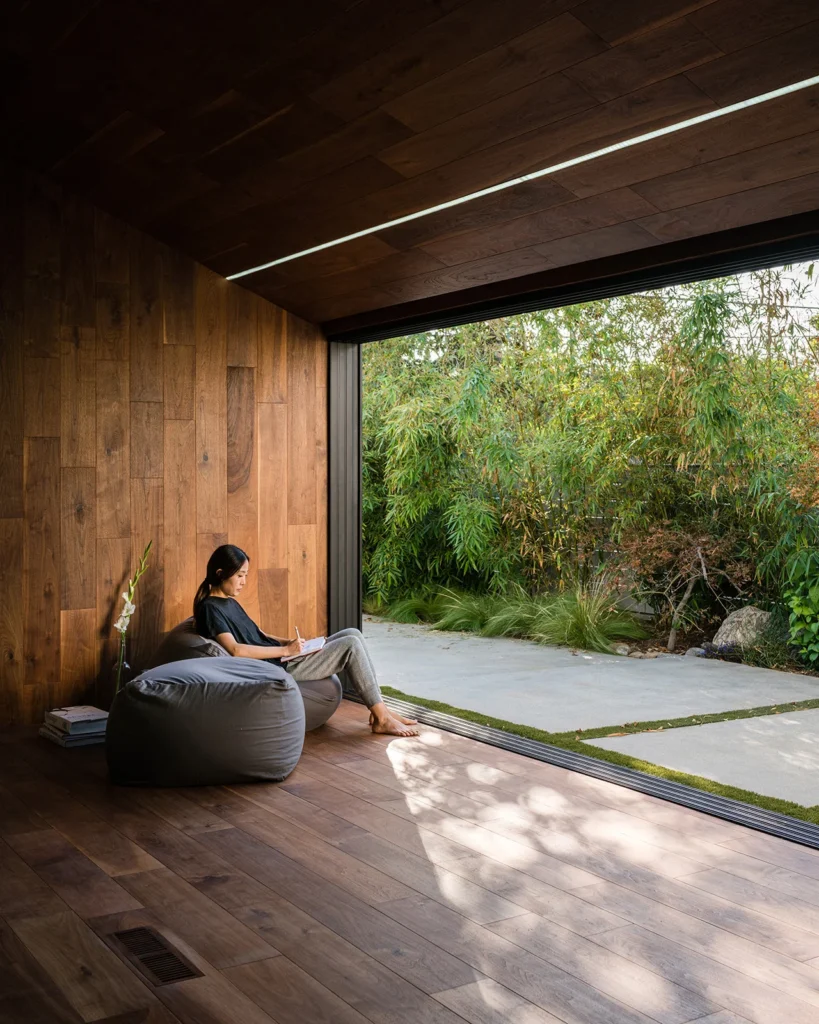
Calmness, serenity and wonder, like, “why am I feeling this way?” Instead of saying, “look at that!” That’s not my number one goal. The number one thing for me is feeling. When you went to Funke with your dad, you felt good. My ethos is that if we’re not happy from within, we cannot design happy spaces.
One of the other things that’s very important for me is my team, as well as their mental health. I want to make sure it’s a positive working environment led through positivity. I think of myself as a communicator and a leader who makes their team feel good. I don’t believe in giving people awards for the sake of it, but if you do something good, I will tell you. Treat everybody with respect and you’ll get the best out of everybody. The same thing goes for our clients. They get the best of us because everybody has good energy. Happy thoughts, happy designs.
Bridge House
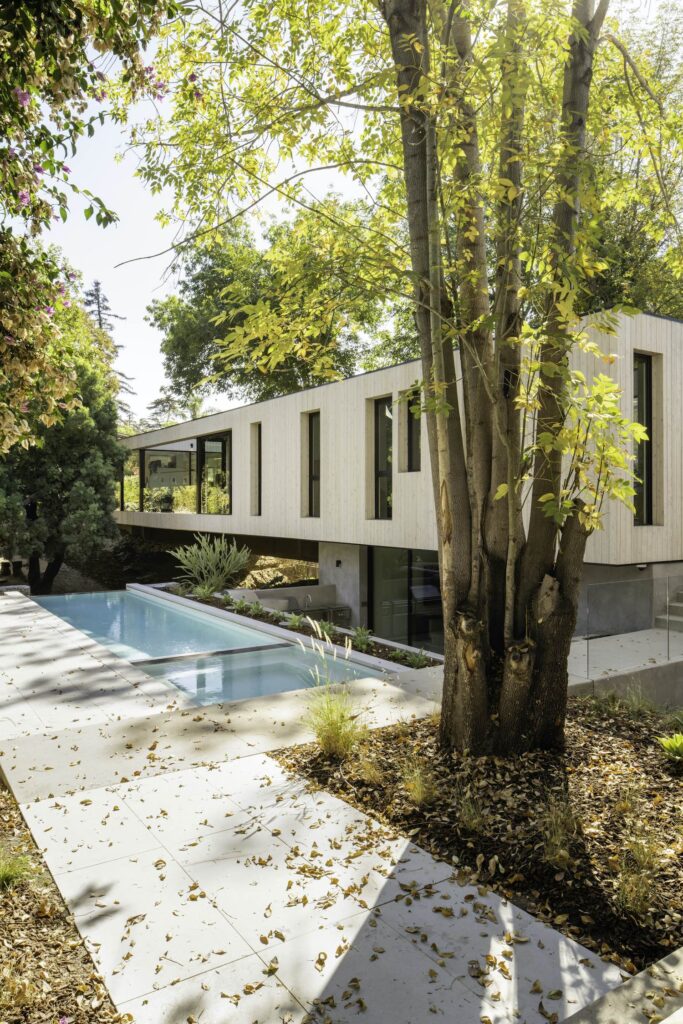
Let’s talk about Bridge House. What’s the backstory and why did you decide to undertake such a massive project like this?
I think a lot of things in my life have happened because I’m open to letting new energy in. When I moved back to LA, I lived in my friend’s apartment, then I rented my own. I started with the idea of buying a house to renovate it and use my skills. So, I bought a 1950s house. I renovated it and lived there for 7 years, which is the longest I’ve lived anywhere.
I moved into a house in an area called Brookside. In LA, a lot of the names are fake. I’ll come back to that, like Crestview (West LA) or Marina del Rey. There’s a marina but where does del Rey come from?
One time, the neighbor across the street invited me to see her backyard. You expect all the backyards in the neighborhood to be the same, right? When I walked in, it was like the cartoons. I rubbed my eyes to make sure I was seeing correctly. There was a brook running through the middle! Hence the name Brookside. So, if you live on the east side of the street, there’s no brook, but if you live on the west side, there’s a brook.
So, I’m living in my house and to the south of this house that I’d just visited was a semi-vacant dormant house with an older lady living in it. I ended up befriending the caretaker of this house. I used to have a band and she’d come see us perform for a few years. One day, she calls me and says, “Hey, we need to sell this house. The lady is going into hospice care and we have to go. Do you want to buy it?” I was given this opportunity. So, Bridge House was built on that property.
Once the property was bought, the idea was to renovate the house. Then, I had this crazy idea of building Bridge House.
What would you say is the best thing about living in the Bridge House?
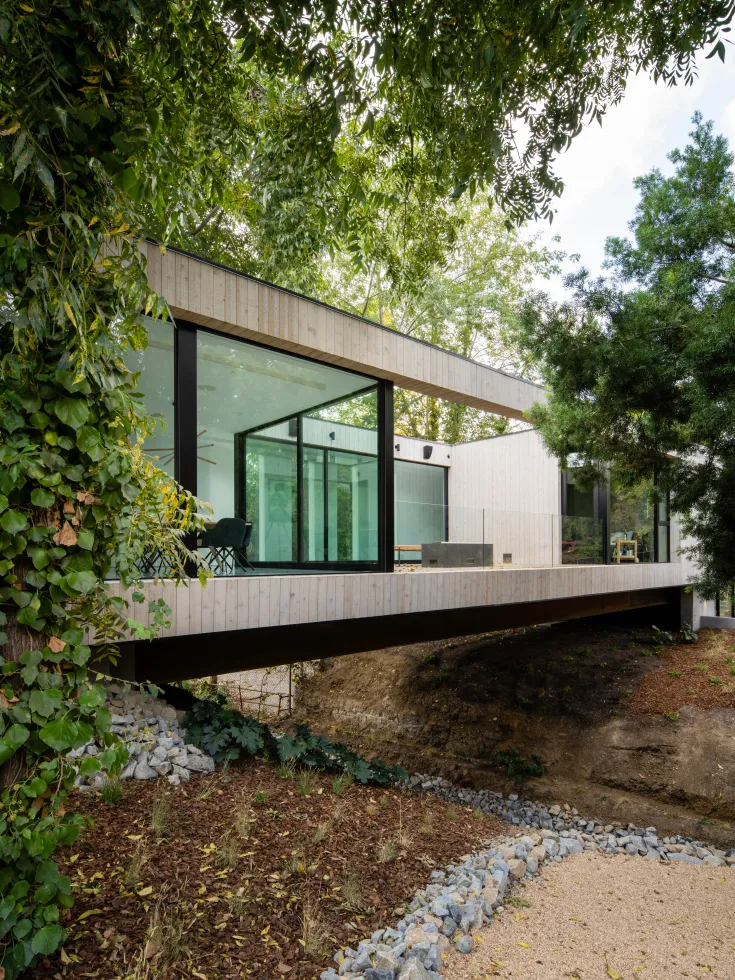
The most special thing about this house is the way it transports you from the city into nature. It’s tough to tell from the photos, but it’s right in the middle of Los Angeles. Suddenly, you’re in a room, but you’re amongst nature. The way the house was designed was to create rooms of nature in each location. That is really special. I always say that architecture is a vessel for light and I truly mean it.
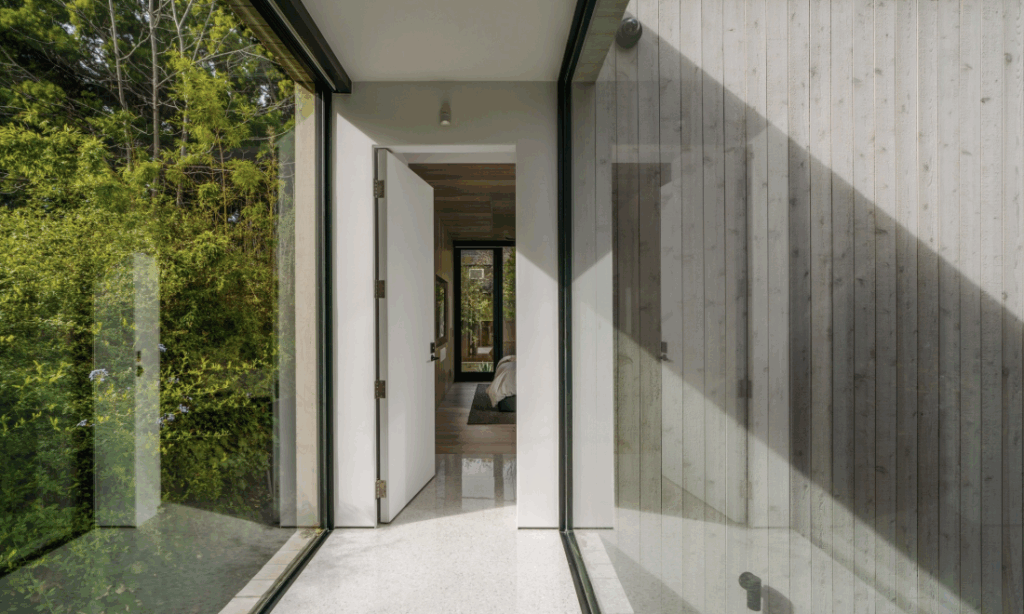
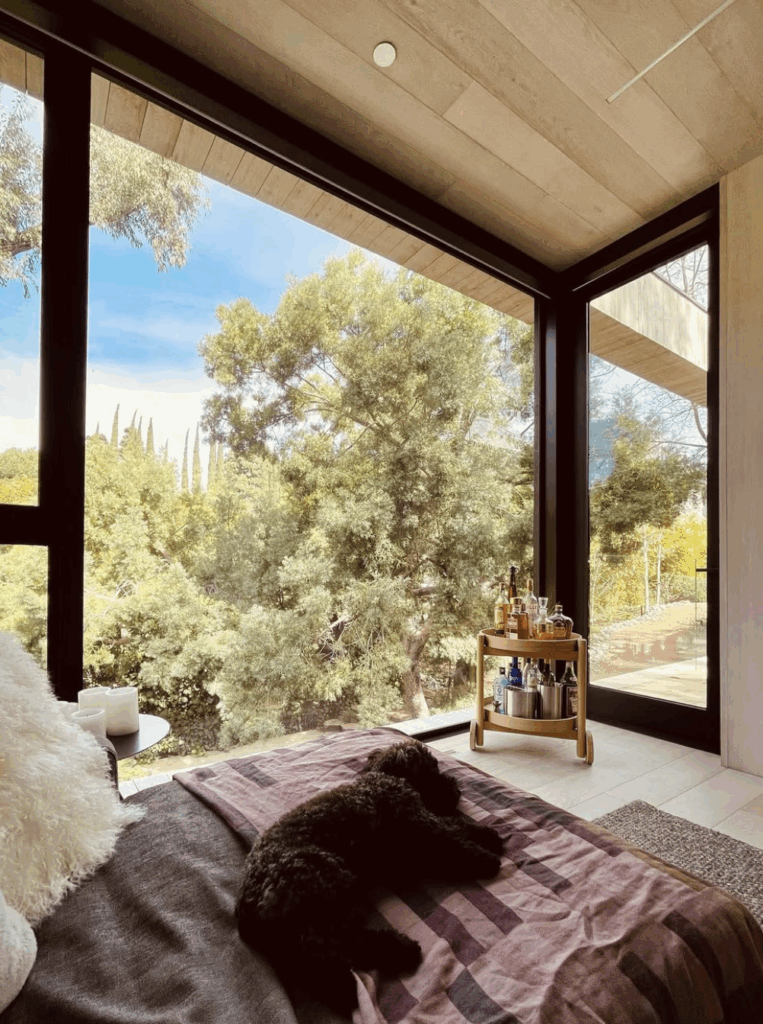
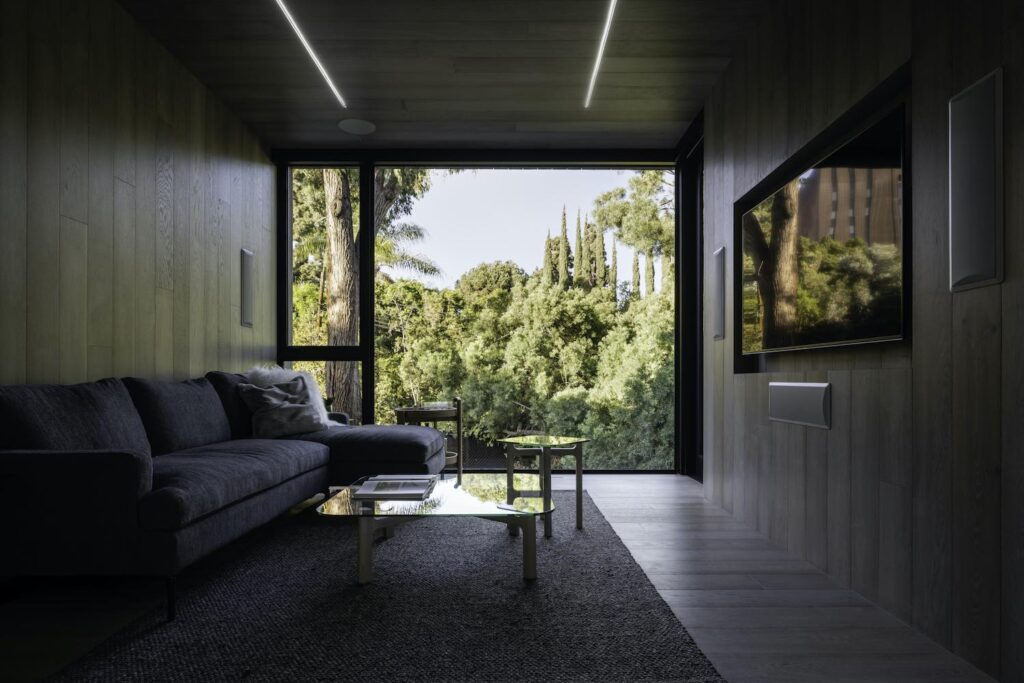
I spend most of my time leisurely in the den. It’s a small wooden room and I love to sit there. It’s also at the tree line, so you’re looking at the trees while you’re sitting.
In all your projects, there’s a common thread of modern design. It seems like you’re always looking into the future. Where do you hope to see architecture in the next 10 or 20 years?
I don’t think that being modern is being contemporary. To me, it is living in the now. It’s really interesting when people ask the difference between contemporary and modern. People have their own definition. I’m living contemporaneously, meaning that I try and hope that whatever I design lasts through the future. I say that there are a few truths that do not change: In the Northern Hemisphere, the sun rises on the east and sets on the west; how our human body has a certain dimension. I design according to those things.
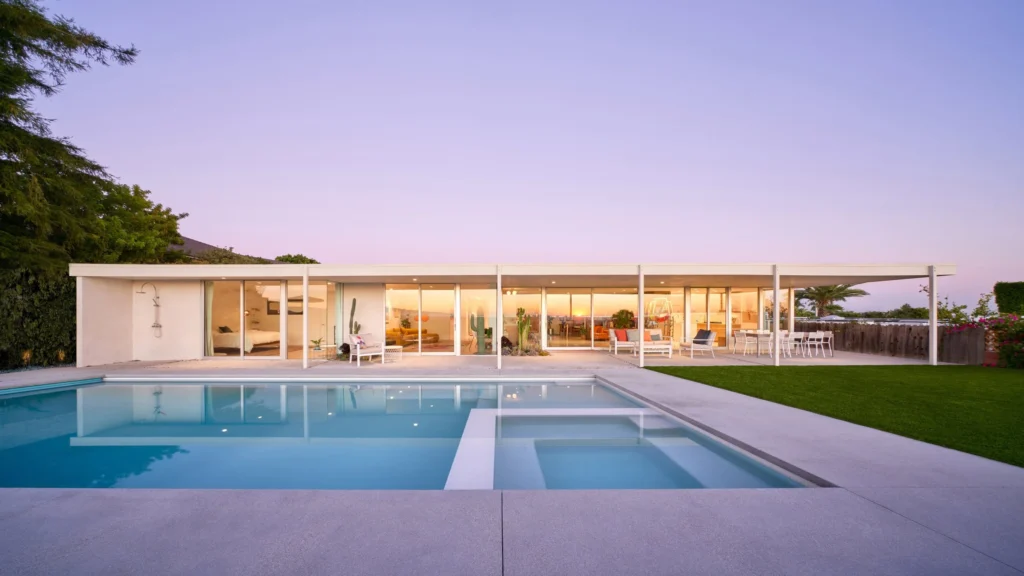
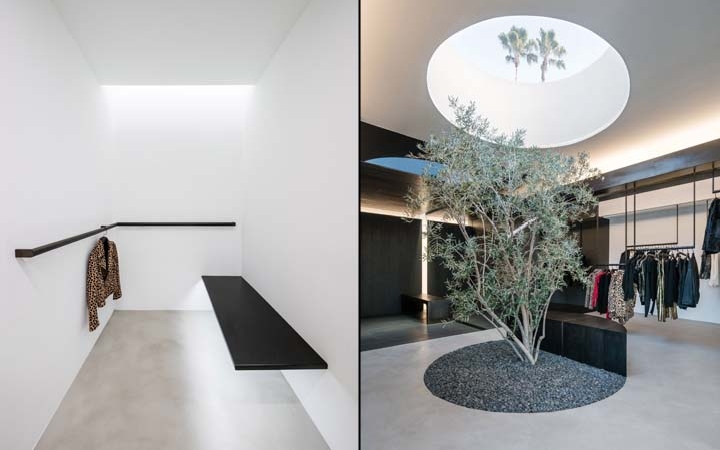
Photo by Brandon Shigeta
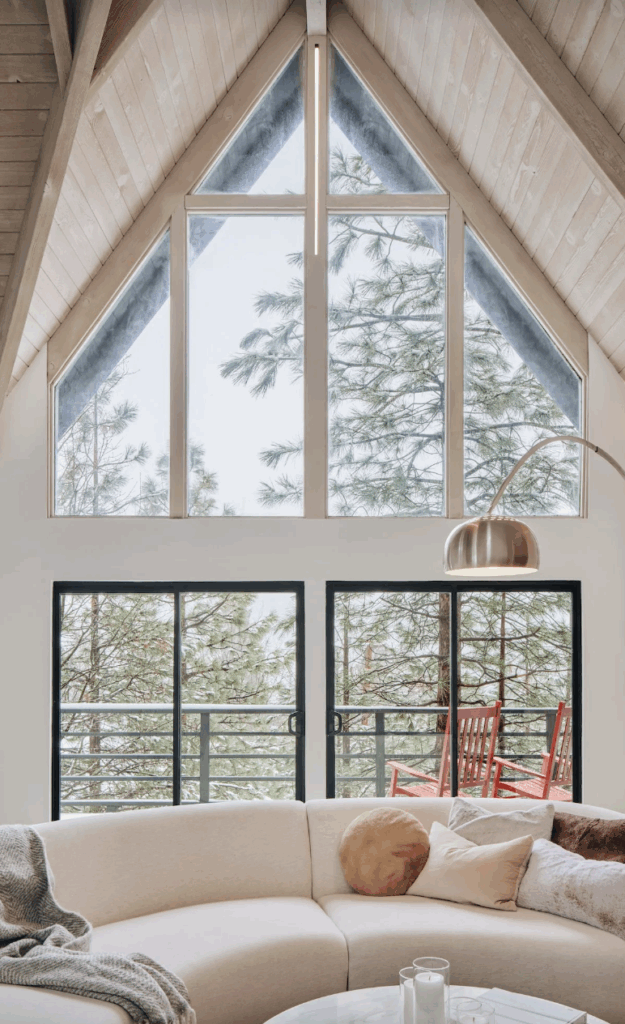
Whatever I design is attuned to the human body, nature and light. That is where the architecture, the projects, and the designs that I work on will last in the future because they’re harmonious with our world — not following trends. The same thing goes when we think about technology, I try to make it as passive as possible and make it work for you.
In the future, I would hope to see more people taking risks and thinking outside the box. Also, working with other professionals to do something great instead of doing the same thing again and again.
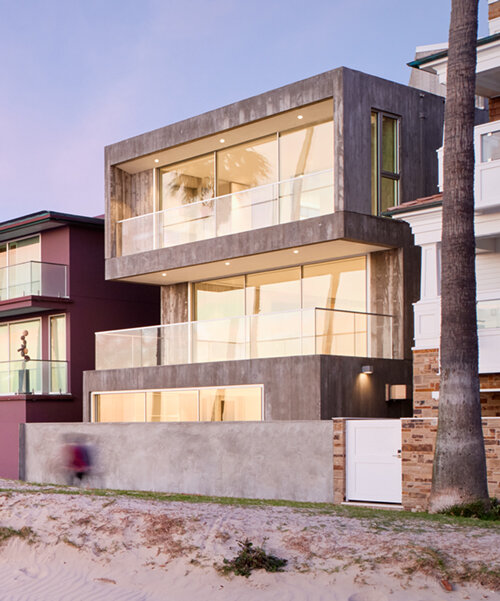
Photo by Brandon Shigeta
The biggest example I can give you, since we’re talking about it, is Bridge House. It’s on a 260ft long lot that is 60ft wide. Most developments would happen right at the front half, and it would be a small box house, maybe a 2-story house and 10,000 square feet because that’s where it pencils out in terms of the bank. Overall, I just hope to see more risks being taken and bigger design ideas.
I read that you’ve dabbled in car design. Since when did you become so passionate about cars? Do you have a favorite one?
Car design became a big passion as a language of communication. When I moved to America from the Middle East, there was such a big juxtaposition. In Israel, there was like one Porsche in the whole country. There wasn’t this abundance.
When I moved to Los Angeles and waited for my mom to pick me up from school: Porsche, Mercedes, BMW… it was crazy! I’ve always been infatuated with cars. I don’t know how it started, probably with design. They have faces and they look at you.
When I wasn’t able to speak English, I had a friend who I would draw with in recess. We would draw this BMW and it became a thing. I made a mission to buy that car, which I own now. It’s crazy to own something that seemed so unattainable when I came to America. It was a part of my story and it made me feel good in that sense.
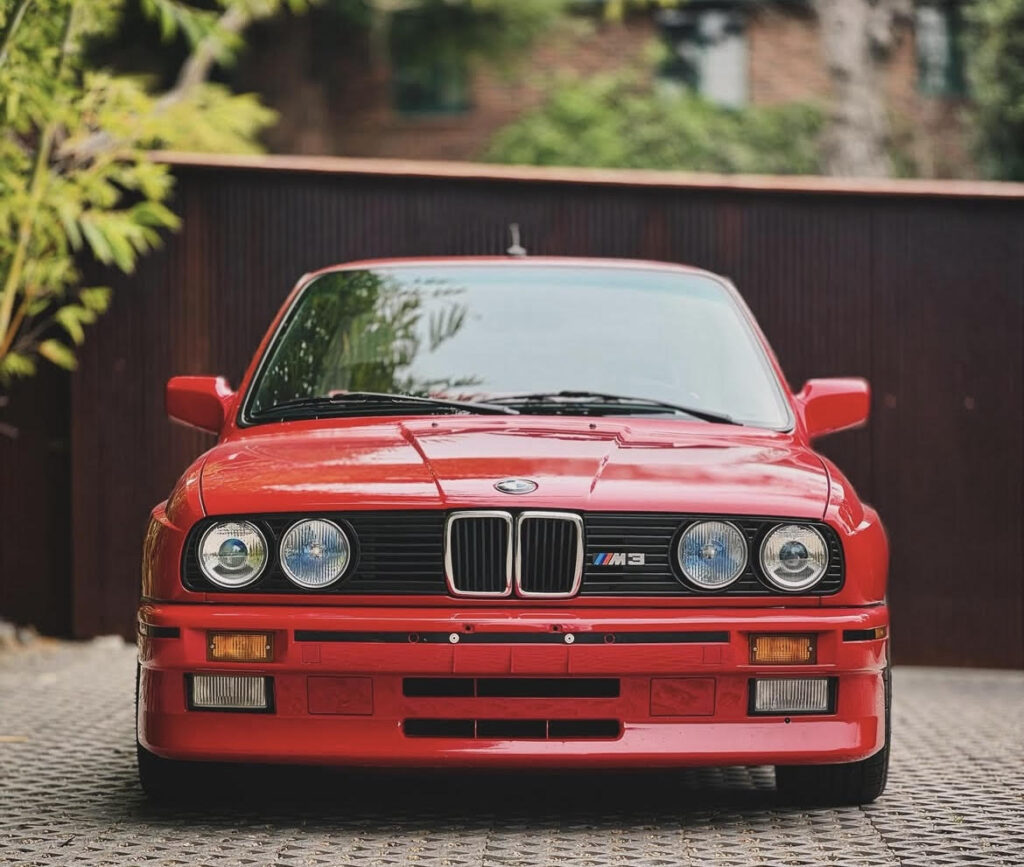
I don’t know if I have a favorite car, but I really enjoy BMW design and their ethos. A lot of people will say I’m crazy or that they’re ugly. However, they are trailblazers of design. They’re really thinking things through: sustainability, materiality, disassembly of the cars, lifespan… I love that.
Although I’m not really in that world, through my passion of car design I became close friends with some people at BMW Designworks, and one of the honors I had was to come to their studio several times and exchange thoughts and ideas. They even came to my house to become inspired, and that feeling… I can’t even begin to tell you. To me, I’m still this kid from this village. One of the cars that just came out a few weeks ago, I actually got to see it a few years ago. If you want to talk about a time machine, car design is that because you’re designing something that people will drive in 10 years. What an interesting thing and what honor to be a part of.
What is the situation now regarding the devastating wildfires from earlier this year?
The situation is very difficult. I get a lot of phone calls from the victims of the fires. Unfortunately, they’re in a no-go position, meaning that they don’t have the funds to realize anything. I don’t think most people were aware of the importance of insuring their houses, and how expensive it is to build. It’s very hard for me right now because we would love to contribute in a meaningful way on the next phase, but it doesn’t seem very likely, at least today. I don’t know. I’m very nervous that some of my favorite parts of the city are going to be overrun by big developers. I really want people to have the house again, but economically, I don’t see how feasible that is.
The city has changed a lot since I moved here 10 years ago. There’s this gas station on Melrose that I’d stop to pump gas. While I waited for the tank to fill up, I’d have an unobstructed view of the Hollywood Hills. Unfortunately, that view has been blocked by one of the many luxury apartments with retail underneath that are taking over the city. Do you think this type of housing is helping or disrupting the urban sprawl of Los Angeles?
You’re talking to somebody who has a long history of being here and at the same time, is very frustrated while being here. There are a lot of issues with Los Angeles, and I’m not even going to get into politics.
It comes back to where I’m from. Being from a dense city versus the urban sprawl of Los Angeles. In the past, I would have told you, “great! They’re building these residential buildings with retail underneath.” Now, let’s pause.
I went to England a few months ago. On the departure, I saw on the news that they were going to take some of the victims’ lands from the fires and turn them into low-income housing. You’re like, “what is this?”
Then, when I landed here, I saw that the California mandate for densified housing, along with Metro stop areas, which is exactly what we should be doing, was vetoed by the LA City Council. When you hear those two things, you start to think, “Wow, this place is being run by idiots”, and it is being run by idiots.
I’m all about densification; however, we’re doing it without a planning head. There’s no rhyme and reason. It’s not well thought-out.
I’ll give you an example. For the new Metro stations, they’re clearing amazing city corners. I live a couple of blocks away from the new Metro that’s going to be on La Brea and Wilshire. That is a major city corner that is now empty with a stupid-looking transit sign without any activation around it.
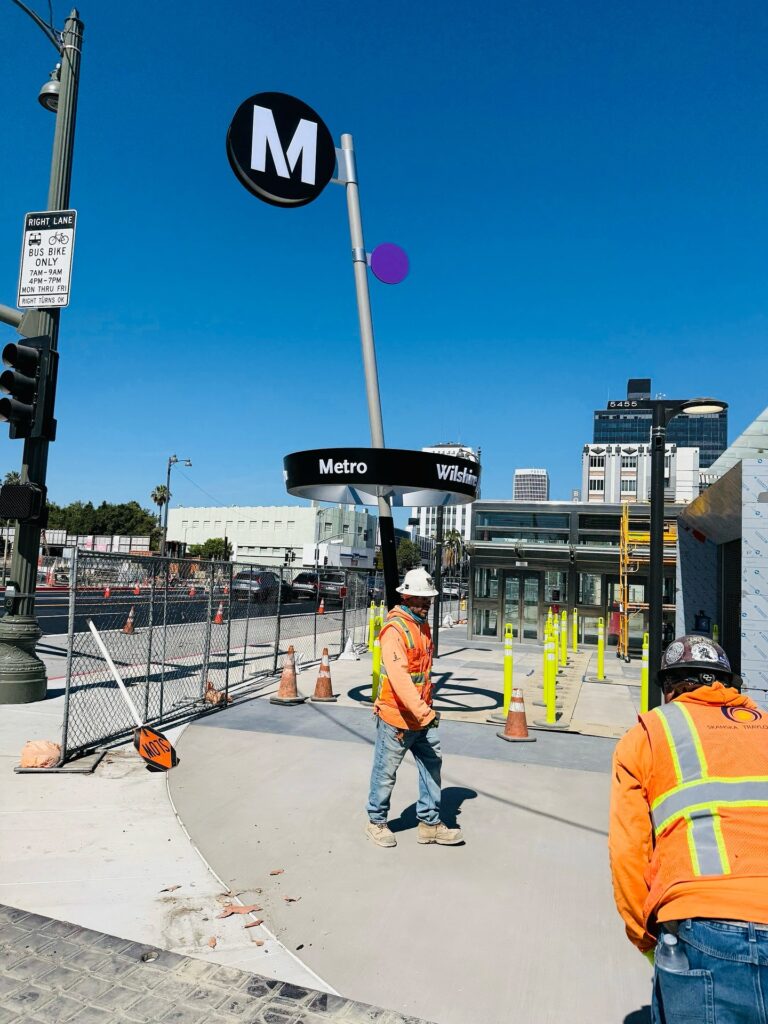
Photo by Signs and Decal Corp
There’s no retail, there’s nothing! Other major cities like London, Paris and New York are not doing that, and the plazas in those cities are shared by the community. I’ve seen three stations that look exactly the same and it’s pathetic – not just because we have some of the world’s best designers in Los Angeles, but it’s also pathetic as a tourist experience. Let’s say you have a family member coming to visit and you say, “go to the Metro stop that looks like this”, but those three stops look the same. That’s a big failure in epic proportions.
So, I believe in having densified housing, but if we don’t embrace it at a city level, then it’s never going to work, and we’re taking up the sky for no reason. London is one of my favorite cities. There are high-rises, yes, but the residential buildings are maybe four stories, max. You can go to a park and be surrounded by trees and open skies.
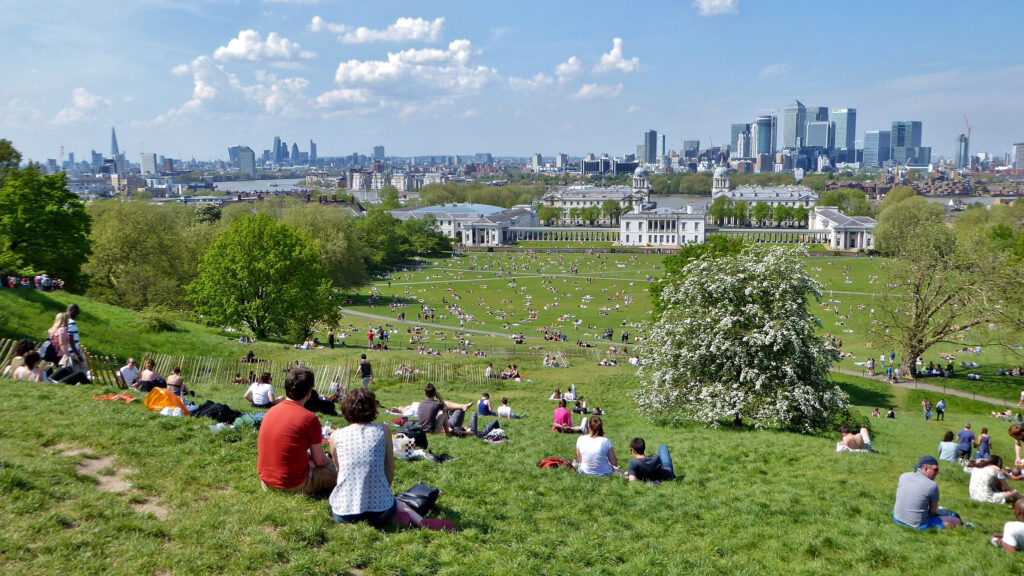
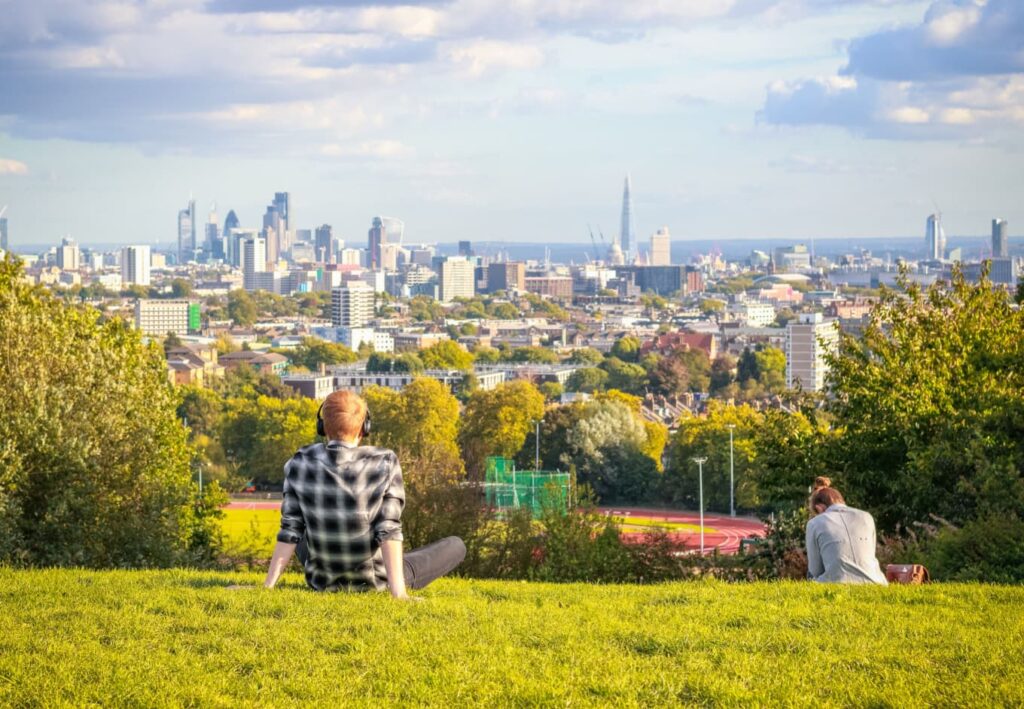
To get a similar experience in LA, you need to book a class on a rooftop, and hiking is not the same because you need to drive to another part of town to fully disconnect. LA is a city of recreation and not leisure.
Another thing is that these new buildings are being built and designed like crap. They’re not valuing the living experience. Some of them have been done by the best architects, but the actual living quarters are not well designed and not made to last. If you’ve been to San Diego recently, it’s very different. They have high-quality mixed-use buildings over there.
Over the years, you have received a multitude of accolades and recognitions. What do you attribute your success to?
I had this question asked many years ago, and it’s tough to answer because yes, there is success, but I’m always looking towards the future. I don’t rest on my laurels and be like, “ok, I’ve done that now. I’m a superstar.” I look at it from, “ok, I’ve done this. What’s next?”
People talk about impostor syndrome, but I have this “never enough” syndrome and that’s always a challenge. To me, the secret of success is to answer each problem to the best of your ability at that moment without ever being encumbered by what people will think.
“What will this project mean?” “What kind of accolades will I get?” “If I do this, then I will get this.” You shouldn’t think about that. Just do the best you possibly can. I think why I’m able to actuate on that is self-belief. When I work on a project, I feel like it’s the best thing out there that I can do in that moment. I’m not second guessing, and that also gives confidence to my clients. You give your clients the best you possibly can.
You’re also a musician, right?
Yes
Are there any parallels between playing an instrument and drawing a sketch?
Yes. It’s interesting, nobody has questioned it that way. I also write music. Writing music is very different than designing. Luckily for me, it’s not my occupation, so I write whatever I feel. I don’t have to think “will it sell?” I don’t have a client to answer to. I’m very naive when it comes to writing music. Sometimes, some of my friends who are professionals will look at whatever I wrote and go, “Do you know you did this?” I have no idea. If it’s good, it’s good, if it’s bad it’s bad.
Architecture is different. It’s an art that has to answer to practical means. Music is not, unless you’re trying to make money, like writing a jingle for a TV show or a commercial. For me, as an architect, I have to respond to codes, budgets, time, so many different things. All of the art that I create with my studio and my awesome team is a response to a client. It’s a commission.
The parallels that I find between these two, which I find very amusing, is the narrative of the experience. When I talk about Bridge House and give tours, I say that I’m a terrible dancer but I’m a great choreographer – meaning that the stages are designed to be walked through with a certain rhythm at a certain pace. It’s creating a dance through the space. It’s a lot of information to take in. If you had to create a soundtrack, you’d have the big drums, then you’d need a crescendo, then a staccato for the light coming through the windows. That’s music and rhythm. However, I don’t sit through it and think about it when I’m creating, I just think about the user experience.
Los Angeles
What do you like about living in LA?
What I’ve always liked about LA is the openness. LA is based on who you are in a lot of ways. You can achieve a lot of greatness here by working really hard, I truly believe that. I was able to do some great things at a really young age, whereas any other city would have been like “Who did you apprentice for?” “Who’s your family?” I’m not saying that doesn’t exist here, because it definitely does! But it’s more open. It’s still the Wild West. It’s wonderful. I attribute my career to being in Los Angeles. Even with all the frustrations, I’m grateful for the city.
Favorite places in LA
I live in Hancock Park and it’s one of my favorite parts of town. It’s loaded with trees. If you go to Google Maps, you’ll see this box of trees right in the middle of the city. It has a nice mix of old-world houses and is not pretentious at all.
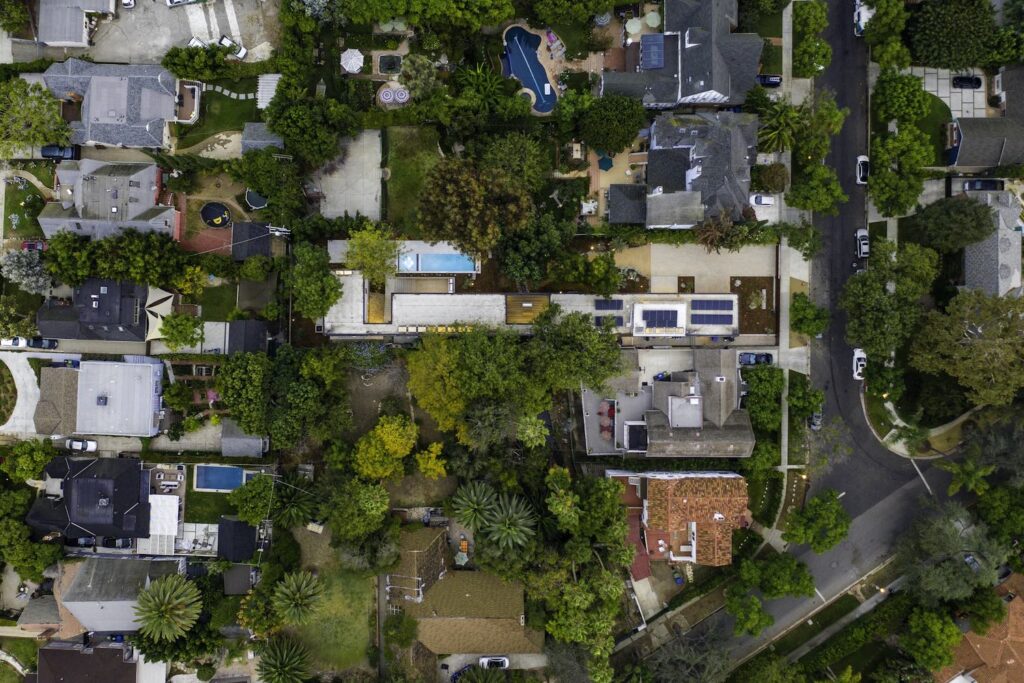
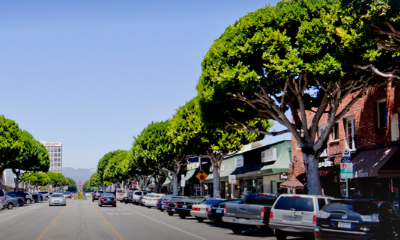
Larchmont Village has been thriving a lot post-pandemic and I love being able to walk there. One of my favorite things to do is take my dog for an evening walk.
I’ve always loved the Pacific Coast Highway in Malibu, but unfortunately that love has been squashed. It’s very hard. I loved going on a Sunday with the car, driving along the coast and seeing the water, but now you see all the destruction and you’re constantly reminded of the people who lost their houses and livelihoods.
Favorite restaurants
Obviously, we talked about Funke. It’s one of those rare moments where I got to design “LA’s next icon”. I absolutely love that place. Then, one of my all-time favorites since it opened is Jones in West Hollywood. It’s an incredible place. So unpretentious. Great music, great food. I love that spot, and I go there pretty religiously.
What do you like to order there?
The pizza is actually really good. I order the mushroom with salami. It’s incredible. Sometimes I order the grilled artichokes. For the main dish, I switch between the NY steak and salmon. Just unbelievable. Then, the apple pie is legendary. You need a friend to help finish it.
Wow. Is it really that good?
I know, I know. I said this to somebody else and they were like, “Bro, there’s no way! What are you talking about?” We don’t have to agree. It’s my opinion.
Favorite architects
There’s a few. Herzog and de Meuron from Switzerland. Rem Koolhaas from the Netherlands, and David Chipperfield from England. Those are my roots, I would say. Those guys really made me who I am in a lot of ways.
Dan’s IG @dbrunn009
Dan Brunn Architecture: Website and Instagram
Bridge House: Website and Instagram