By
By 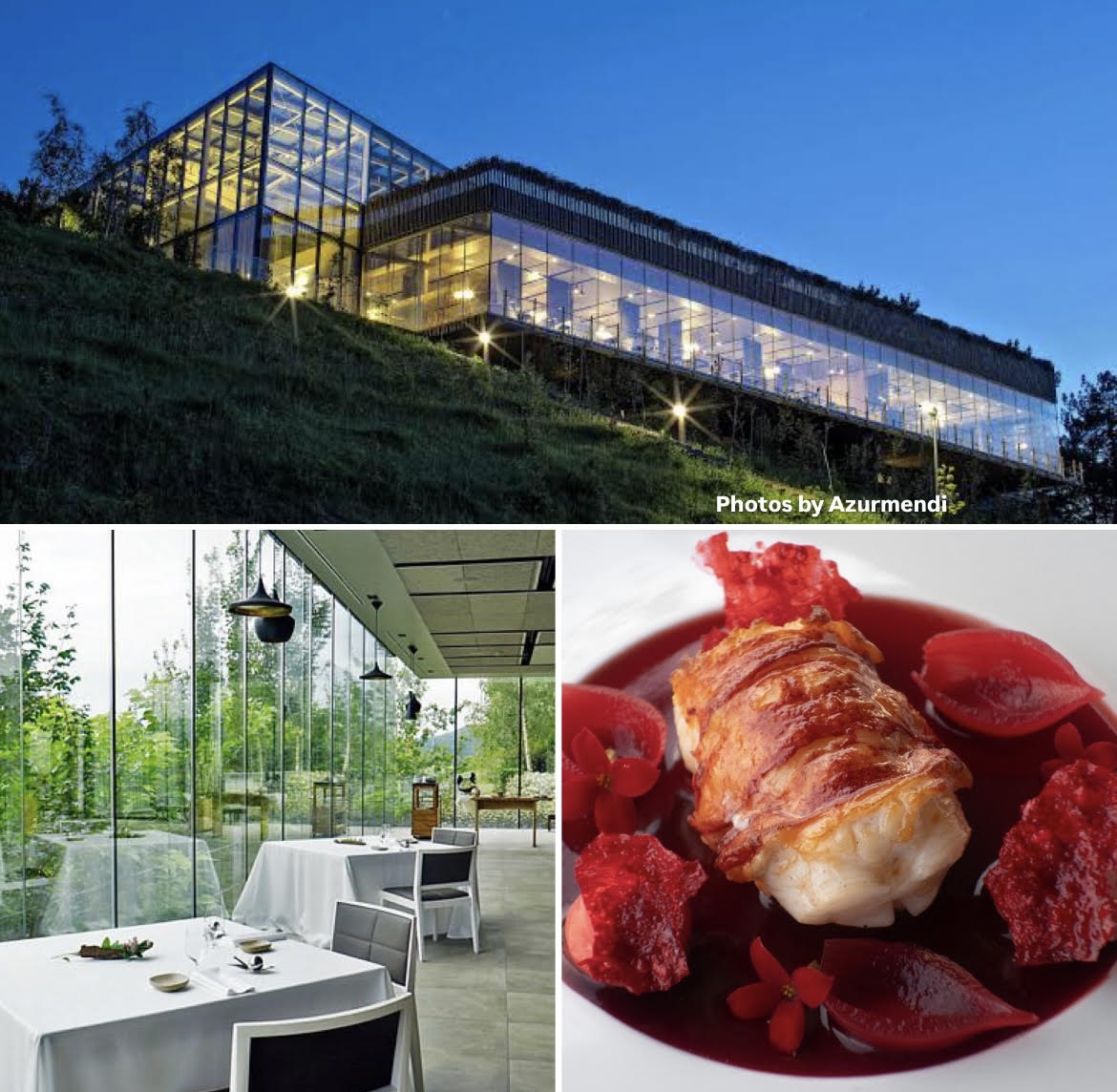
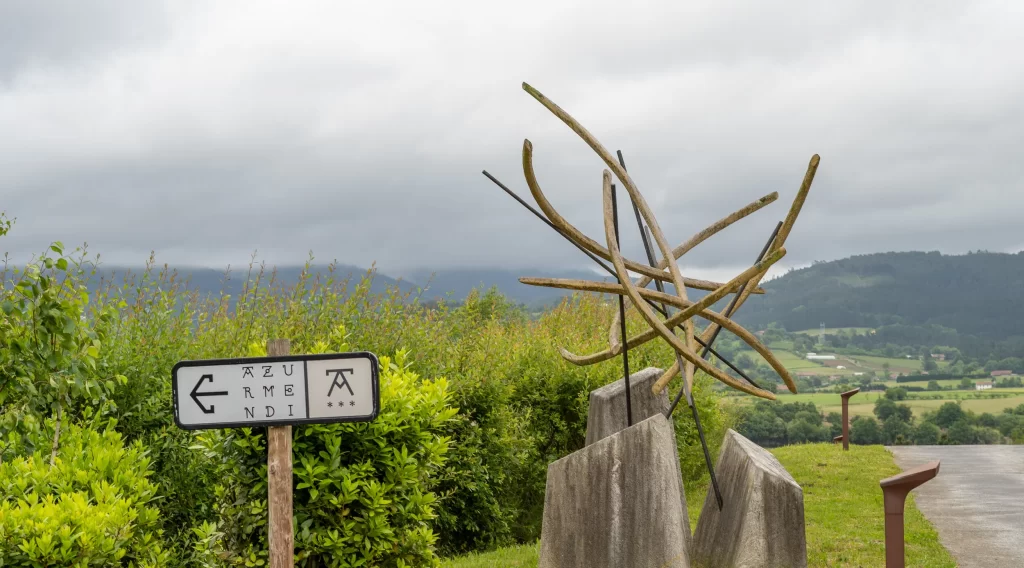
In August 2025, I had the privilege of dining at the Basque Country’s world-renowned restaurant, Azurmendi. Located on the outskirts of Bilbao, Azurmendi is a gastronomic delight where sustainability comes to the forefront.
Having been named the world’s most sustainable restaurant and featured multiple times on The World’s 50 Best Restaurants list, Azurmendi has become a culinary beacon. It was opened in 2005 by Spanish chef Eneko Atxa, born in 1977 in Amorebieta, which is only a short drive from Azurmendi.
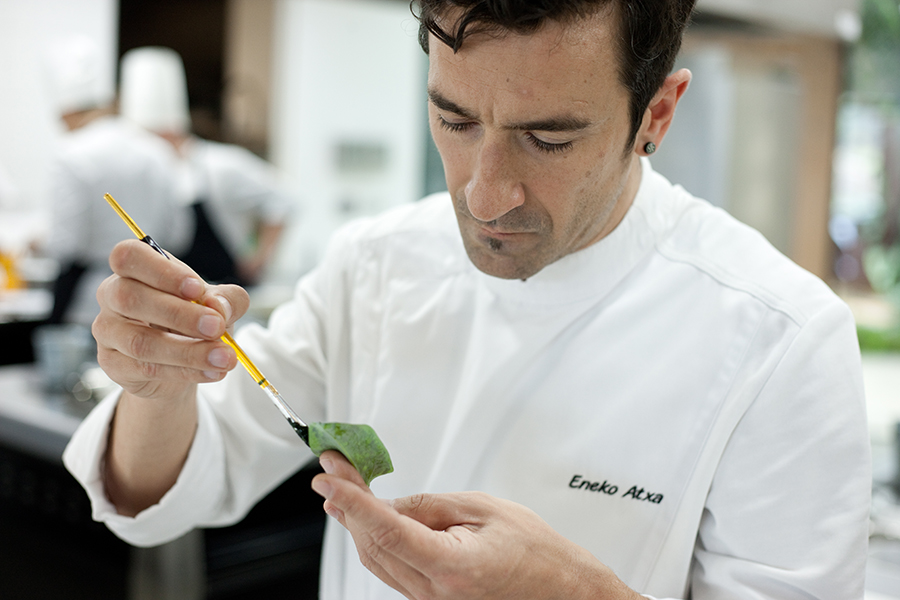
Photo by Azurmendi
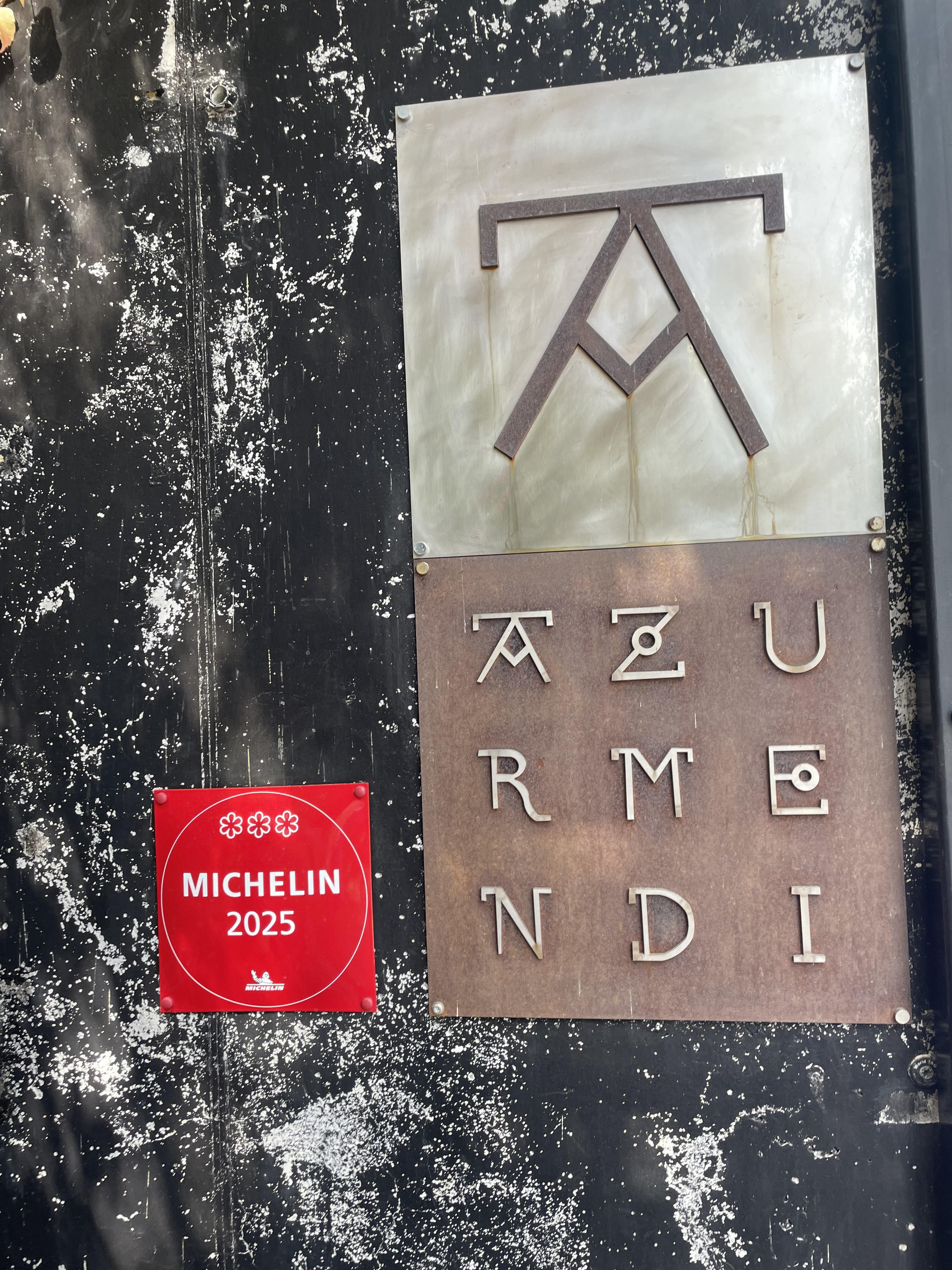
Over the years, Azurmendi has earned not one or two, but three Michelin stars. Three Michelin stars represent the highest distinction any restaurant could dream of, and only 157 restaurants in the world hold that coveted status.
Eneko’s culinary career started at the age of 15 at the Culinary School of Leioa, where he immersed himself in Basque cuisine. Azurmendi is the culmination of Eneko’s love of experimenting with flavors. It’s also a love letter to his hometown by employing sustainable agriculture practices to preserve the Basque Country’s natural beauty.
The Basque Country is known for its rural houses, offering a taste of authentic and traditional Basque cuisine. However, Azurmendi takes the traditional aspect a step further by combining remarkable flavors and avant-garde creations. In the last few years, young, promising chefs have emerged in the fine dining scene by using food as a means of creative expression. But twenty years ago, a place like Azurmendi was an anomaly, especially in the Basque countryside, a region of Spain that’s deeply rooted in tradition.
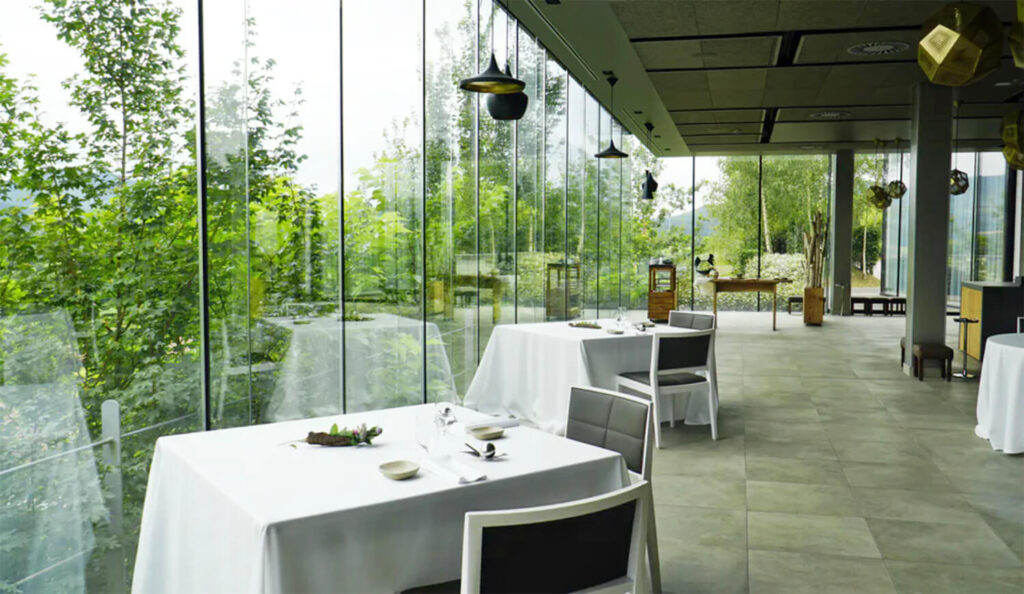
Another thing the Basque Country is known for is its lush green fields, dense forests and coastal scenery. Perched atop a hill, Azurmendi provides guests with a harmonious blend of nature and modern architecture.
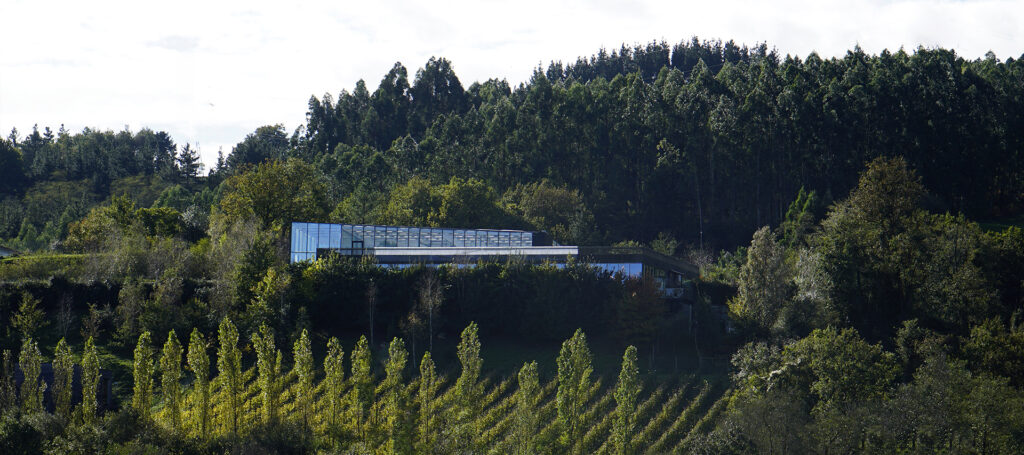
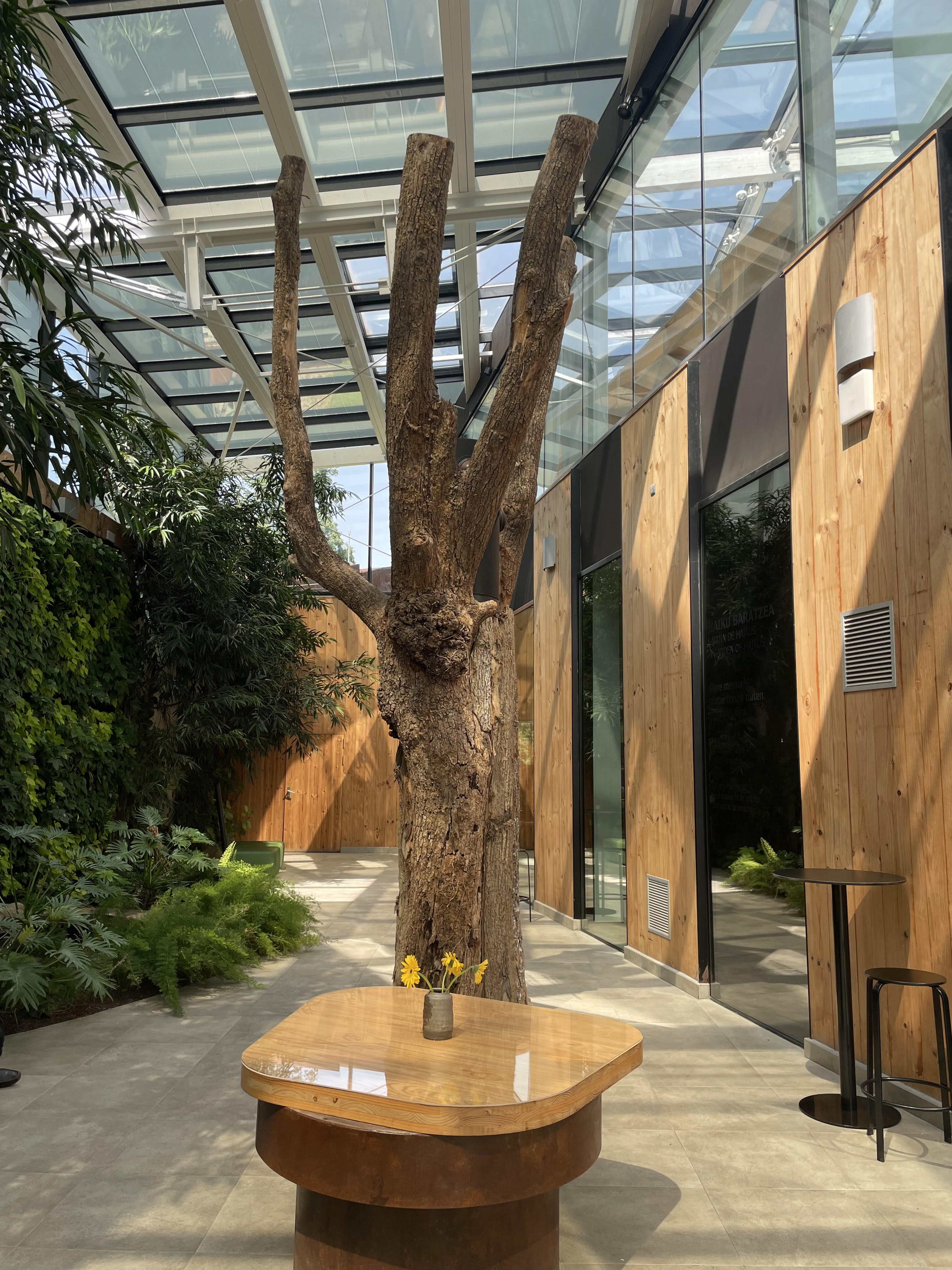
In a 2019 interview with Four-Magazine, Eneko said: “I want guests to perceive that Azurmendi is not conceived as a restaurant, but as a home. We created a space in which we did not want to invade the environment, but to live with it. We let nature literally enter the house: there is nature within the building itself. Equally, when choosing menus, I find out what products I will have for each season. There are certain products that are given by nature. The change of the menu each year depends a bit on the environment, the climate, etc. Every season, I am excited about what nature offers us. In autumn, I am crazy about mushrooms, in spring about good peas or in summer about an extraordinary tomato.”
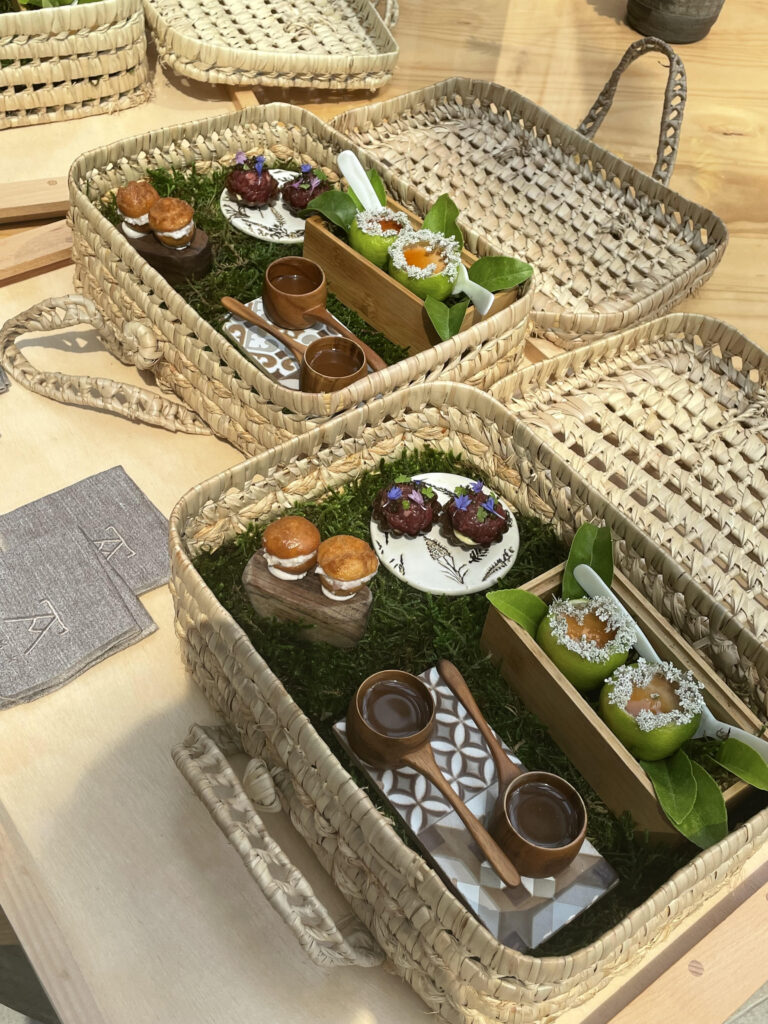
My family and I were a party of four. Upon entering the beautiful atrium, we were welcomed with a picnic basket, which included smoked fish in a brioche bun and betizu (cattle) tart with butter and caviar. To wash it down, the picnic included lemongrass on a green lemon carcass and marianito. The latter is a vermouth cocktail, very typical in northern Spain.
Afterward, our host ushered us to the kitchen, where a legion of cooks momentarily chanted a greeting in unison and went back to their tasks.
Azurmendi’s massive kitchen was exactly what you’d expect from a Michelin-starred restaurant: impeccably clean, with cooks wearing tall hats and poring over meticulously crafted dishes. It felt more like a culinary lab.
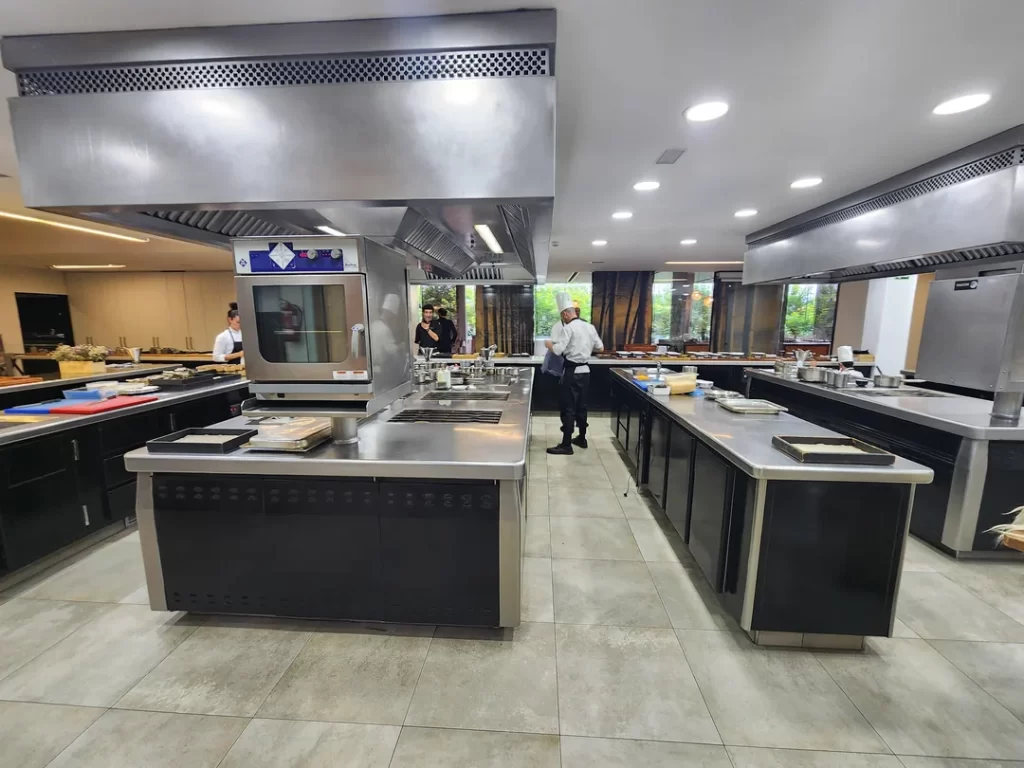
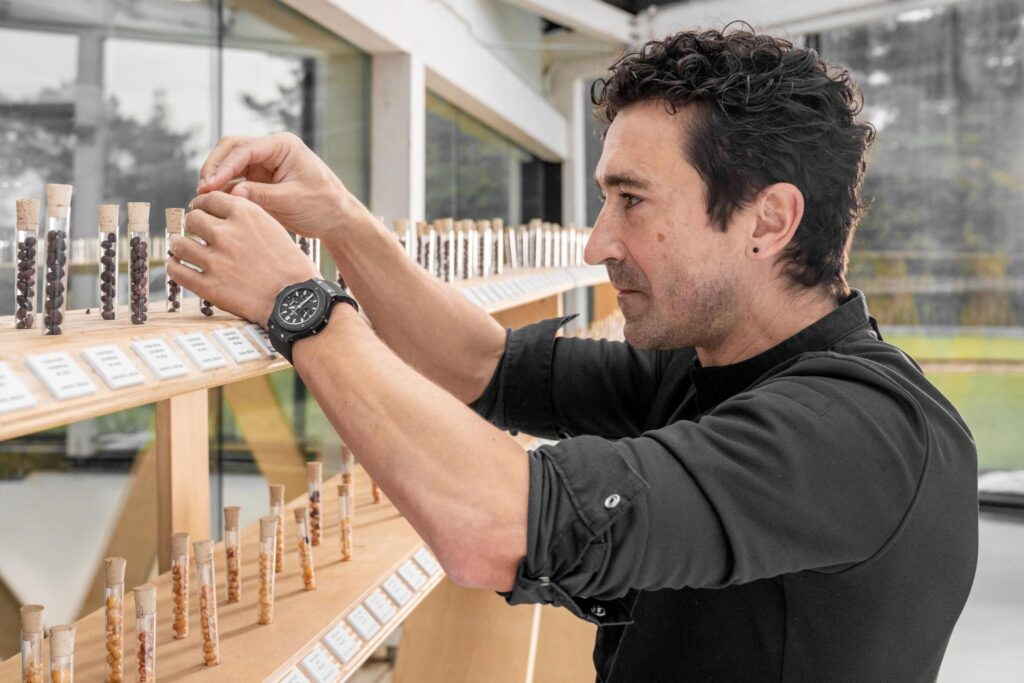
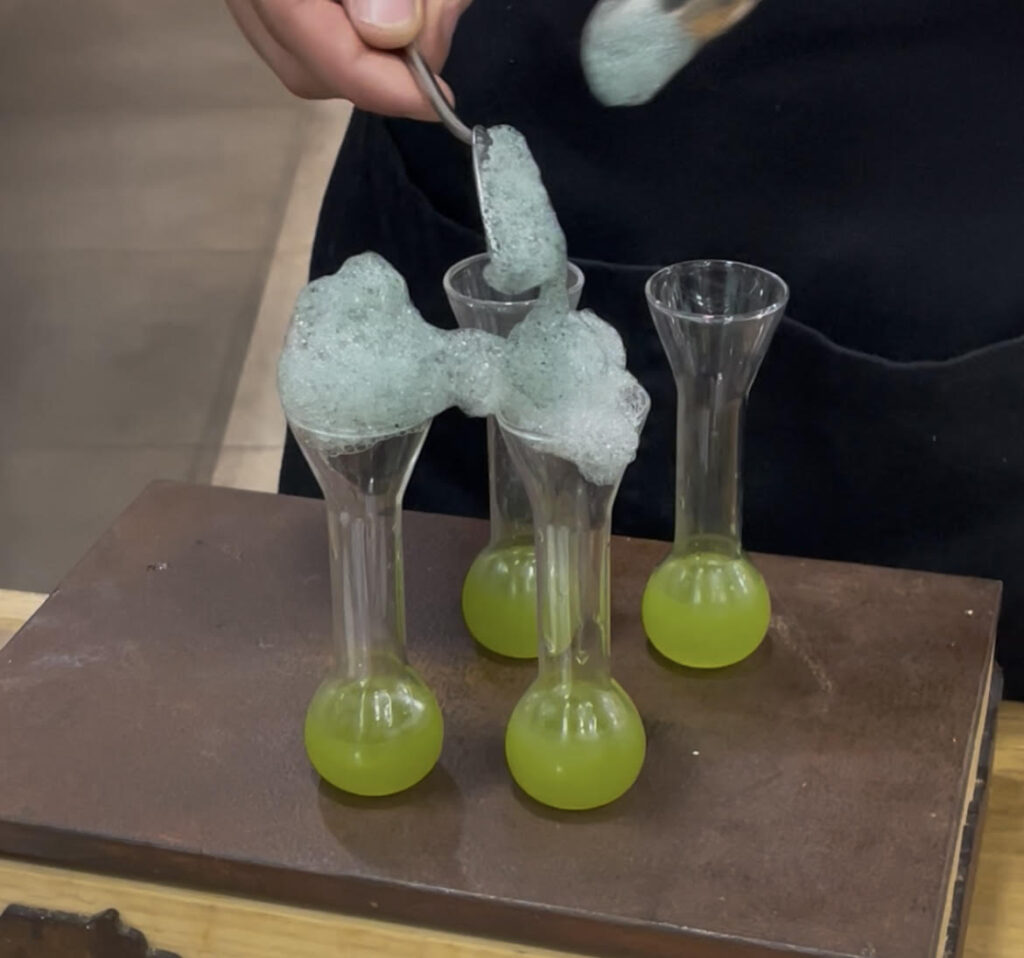
While I was taking in the space, a cook was making a concoction with four test tubes. Here, we had some seafood appetizers that got our taste buds revved up.
Salmon roe caviar wrapped in a nori sheet, white prawn paste that was mildly sweet and squid that I didn’t photograph. For drinks, we were given txakoli in a test tube. I liked how the sea foam at the top left a subtle oceanic aftertaste. In these appetizers, there was a common thread: a satisfying symphony of flavors and textures.
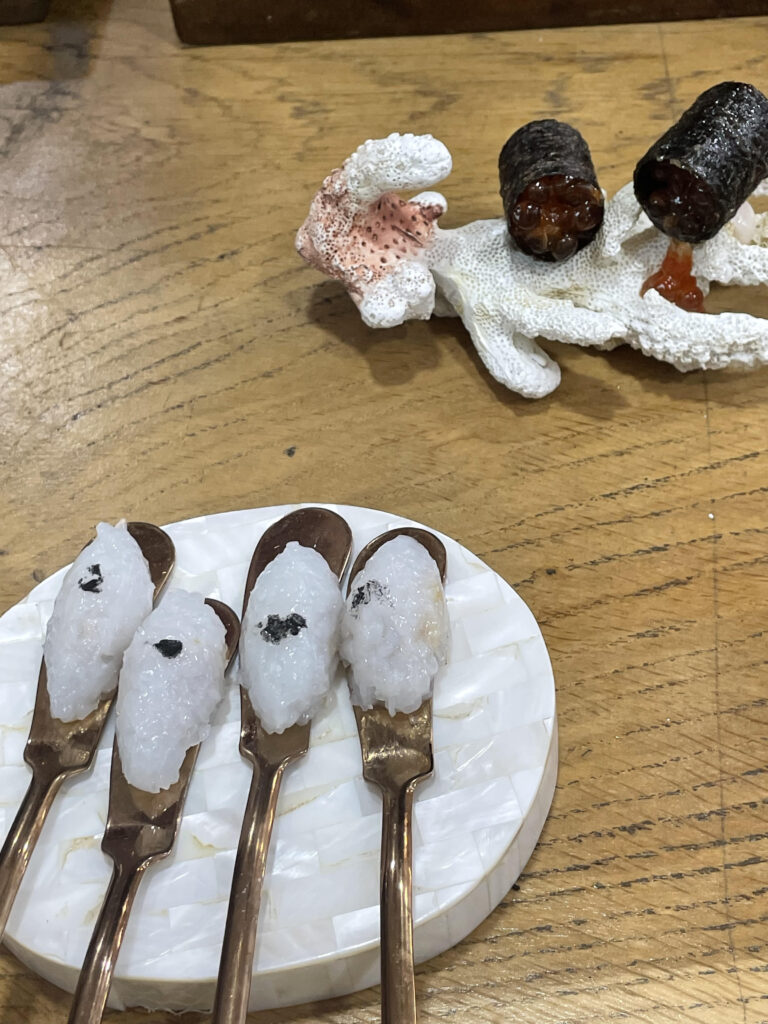
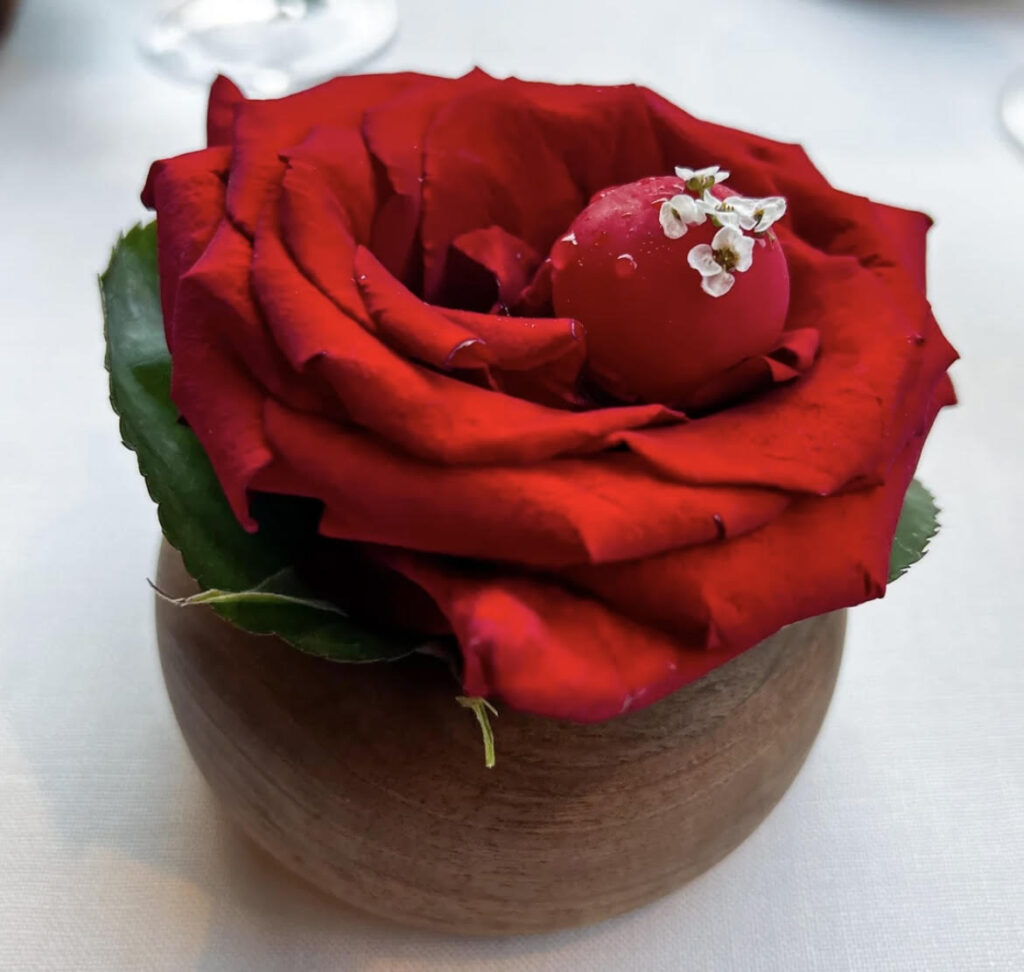
Then, we were guided to “the garden”. This very warm greenhouse was decorated with roses that looked straight out of the enchanted rose in Beauty and the Beast.
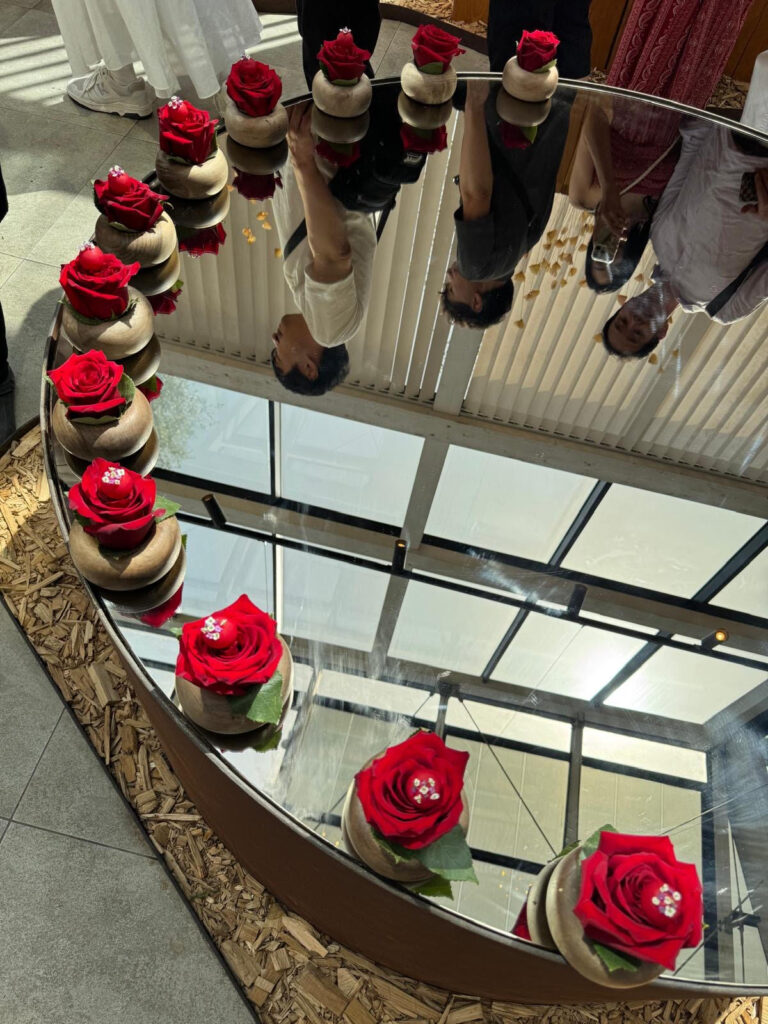
Made of compost, the roses delicately held a kaipiritxa ball, which burst into a mix of passionfruit cocktail and rooibos tea-infused rum. The silky soft exterior gracefully balanced the sourness of the alcohol.
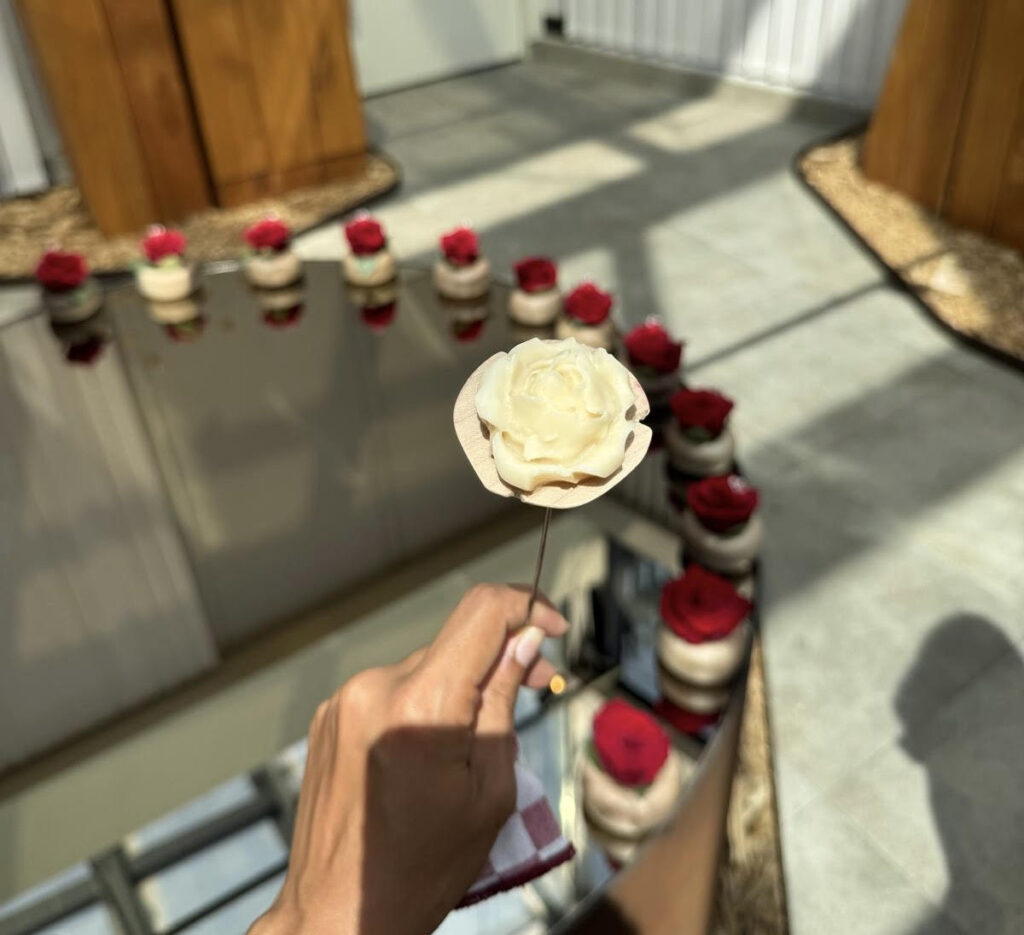
This edible rose, which, at first glance looks like it’s made of white chocolate, is actually made of almond flour. The gel-like texture of the petals just melted into a nutty paste in my mouth.
Main dining room
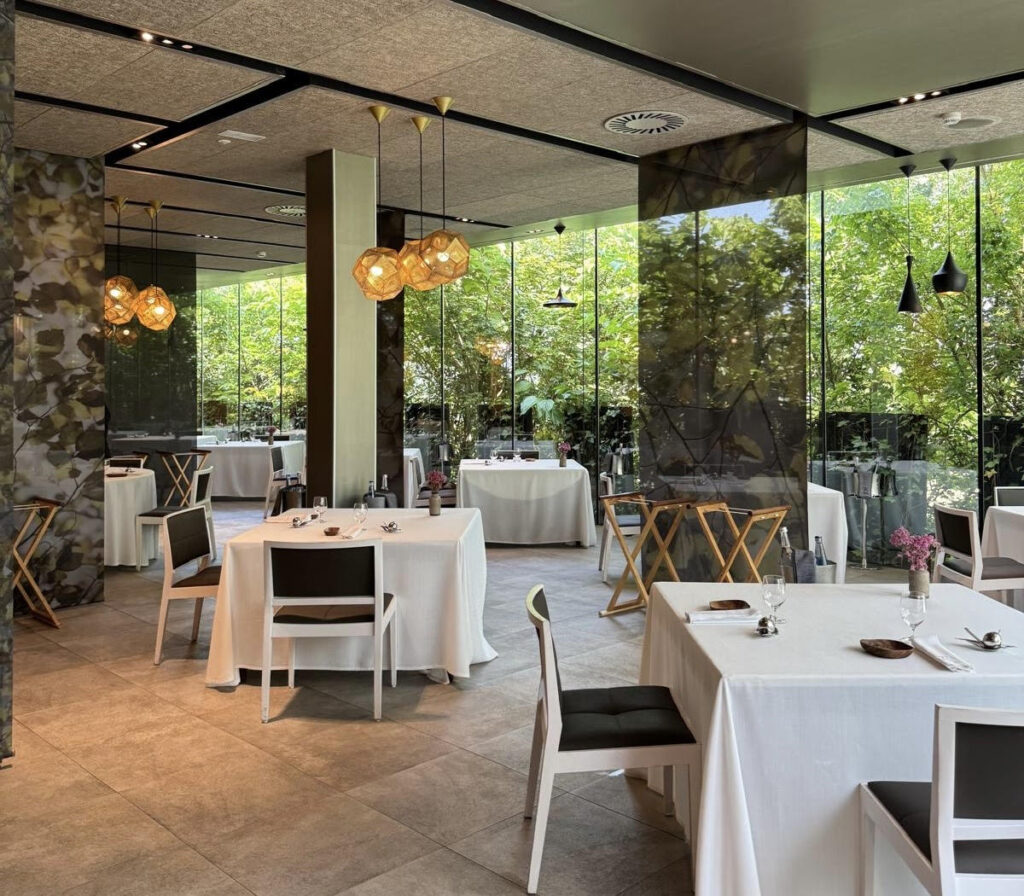
At Azurmendi, the connection to nature permeates through the dining room, where guests are able to look out into the lush foliage as they’re being pampered by the formally dressed waiters. To my dismay, I had to be seated facing the open kitchen, which I then found to be more entertaining because I was privy to the ins and outs of the staff and cooks. More on this later.
As we were nearing our table, four waiters were looking at us expectantly, waiting to pull out the chairs for us. “Wow!” said my dad in amazement. Azurmendi’s meal consisted of a total of 28 courses. These were the standouts:
Injected with black truffle through a reversed technique, this egg yolk is one of the most acclaimed dishes at Azurmendi.
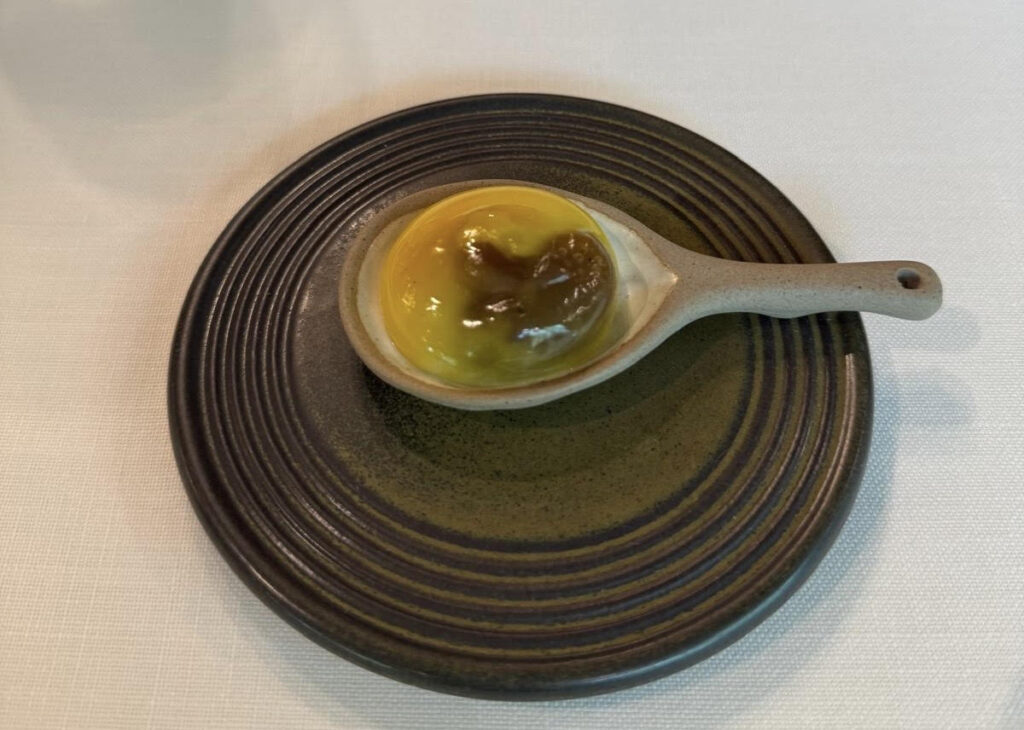
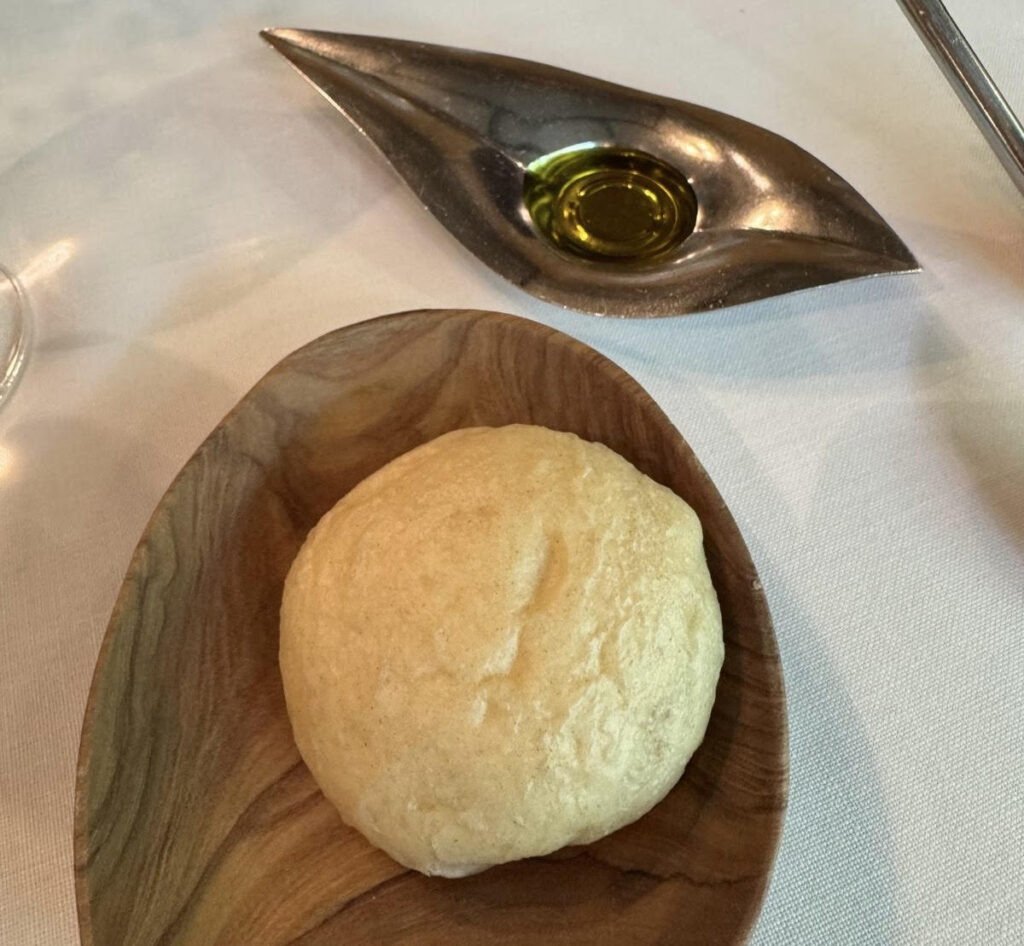
I’m not a bread person, but the milk bread underneath stole my heart. It was so good that I couldn’t refrain from eating my dad’s too. The texture was exceptionally fluffy and moist, and I relished dipping it in the Arbequina olive oil and the sauces from the different courses.
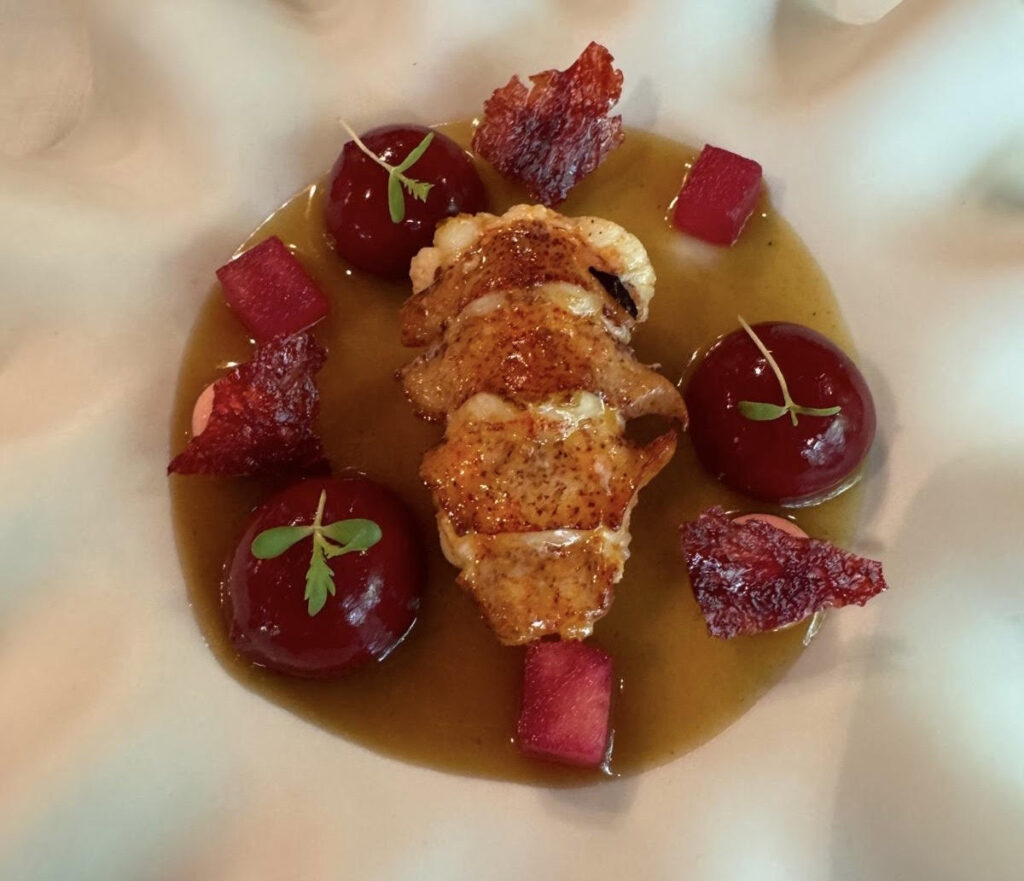
Roasted lobster with purple onions and jus. Excellently cooked. Firm but not too chewy. The savory sauce added a subtle tanginess, complementing the buttery texture of the lobster without overpowering its natural flavor. I noticed a pleasant sharp bitterness in the sauce while eating it; it turns out the jus is made with coffee butter!
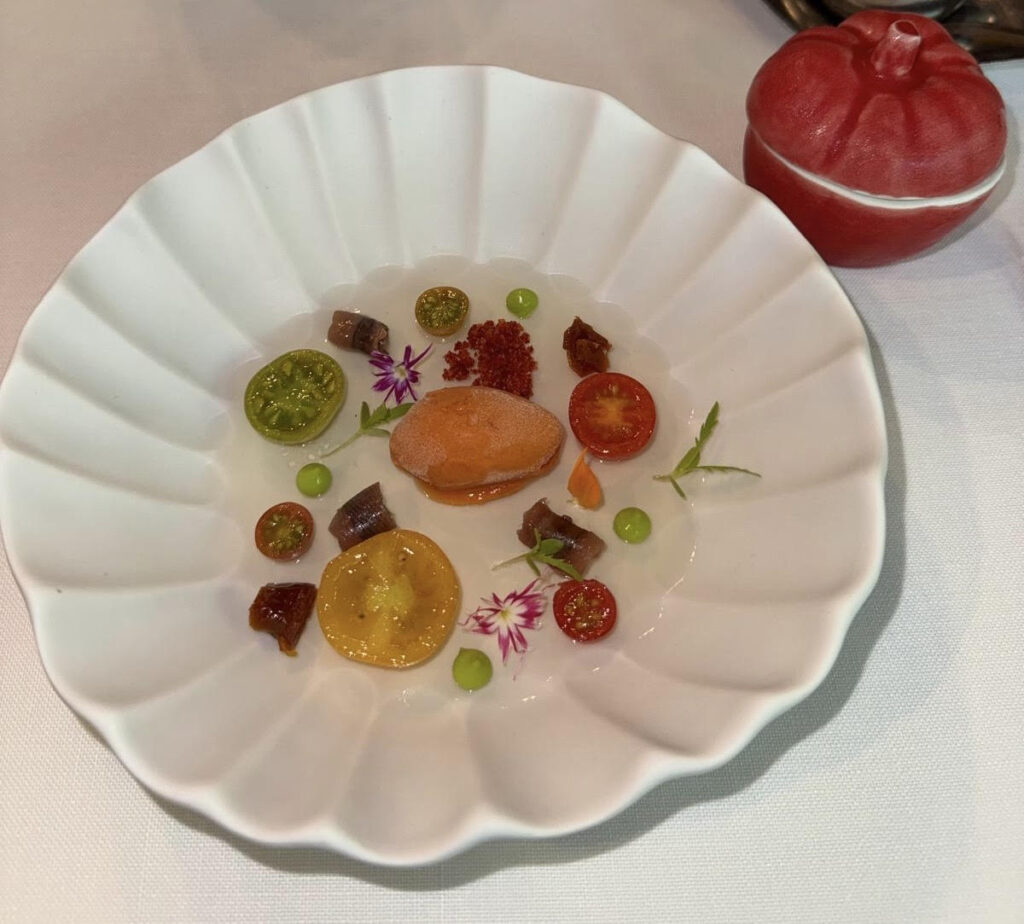
Bloody Mendi. This was my favorite. Think of the most intensely flavored tomato sorbet – an incredible thirst-quenching treat. Then you pair it with the real thing: impossibly ripe, farm-fresh tomatoes of different varieties. The small bits of anchovy tied everything together, adding a subtle yet punchy umami flavor.
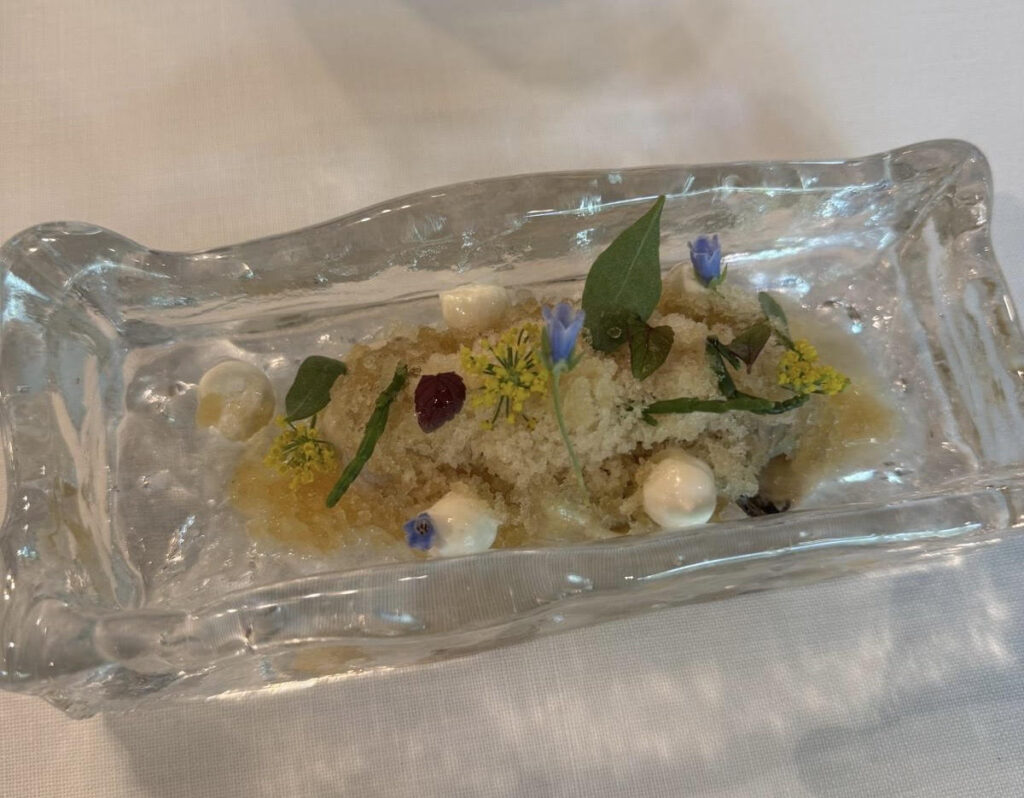
Oyster with finely shaved ice marinated in seaweed. The combination of different temperatures, the juxtaposition of the cold ice, the tenderness of the oyster and the creaminess of the sauce at the bottom made this another winner on my list.
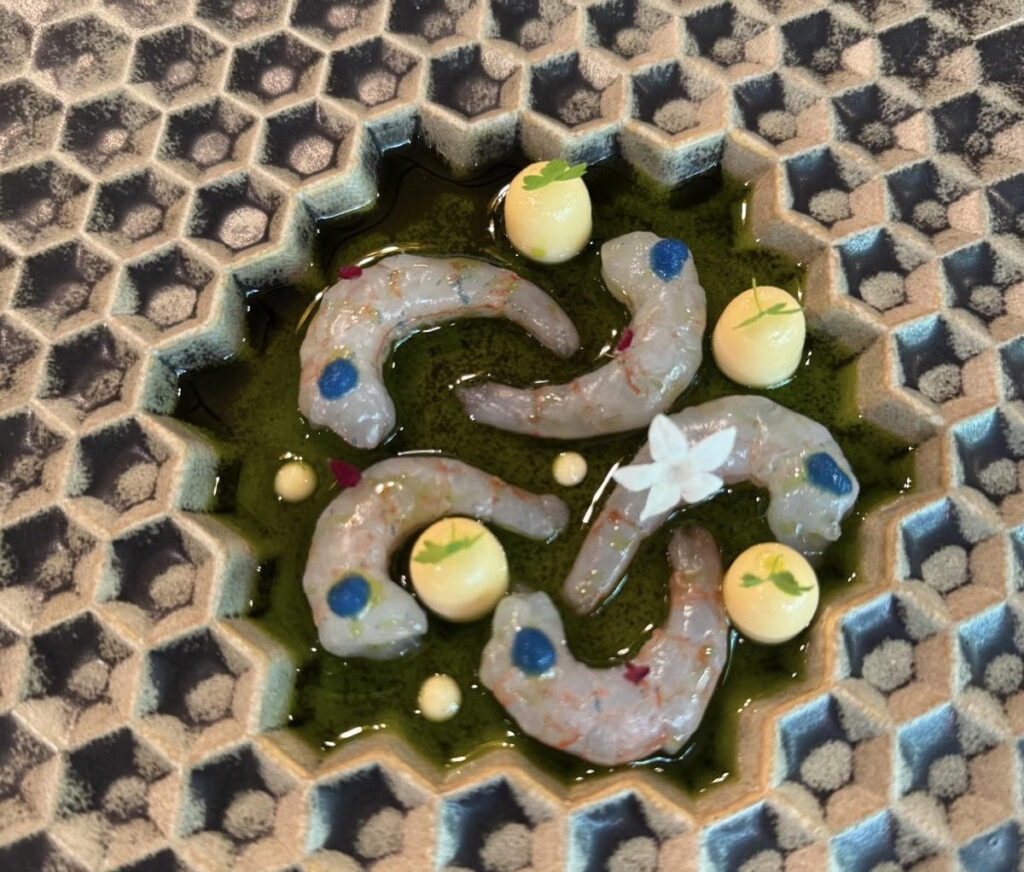
Peeled shrimp with “herbal essence” sauce — another of Azurmendi’s signature dishes. The delicately tender shrimp lent itself very well to the vibrant, tangy green sauce and small dollops of cream. Incredible.
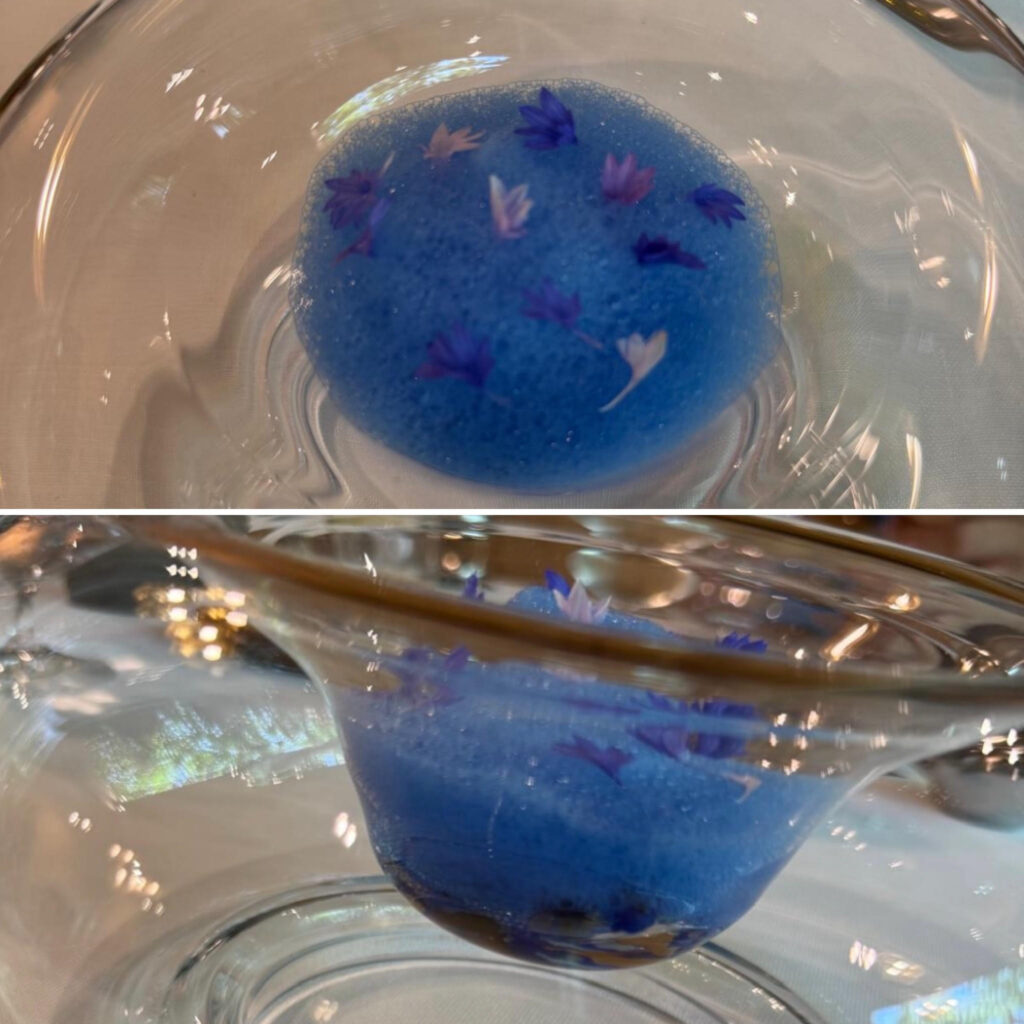
Sea urchin and spider crab mixed in a blue spirulina foam. Light, airy and very reminiscent of the ocean with a subtle, briny aftertaste.
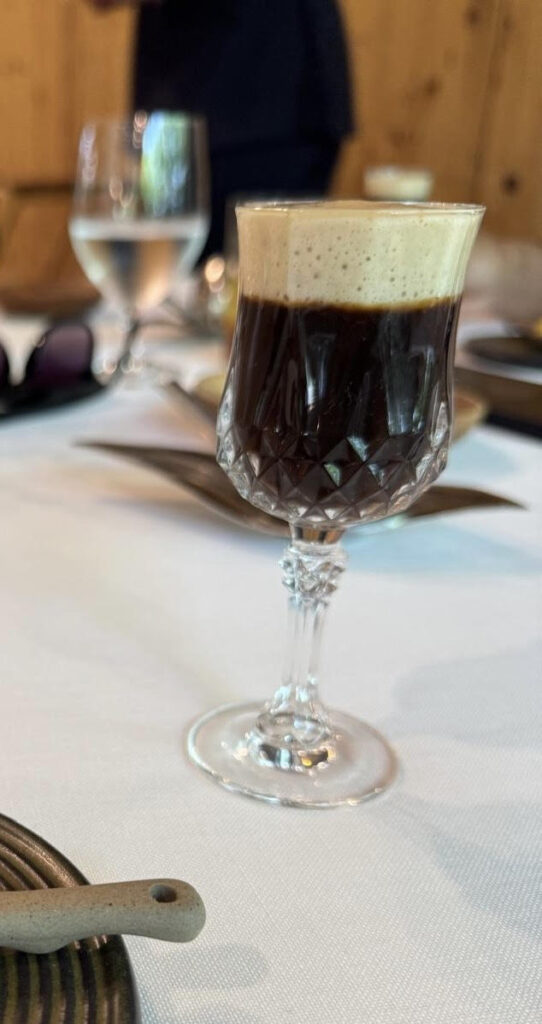
Boletus. This was a very punchy mushroom stock which spectacularly showcased the essence of the Basque countryside.
Up until this point, seafood had been the star of the show. The sudden introduction of a meat dish felt completely disjointed. We were also nearing the end of the 28-course meal, and the waiters said that this was going to be the most filling one yet.
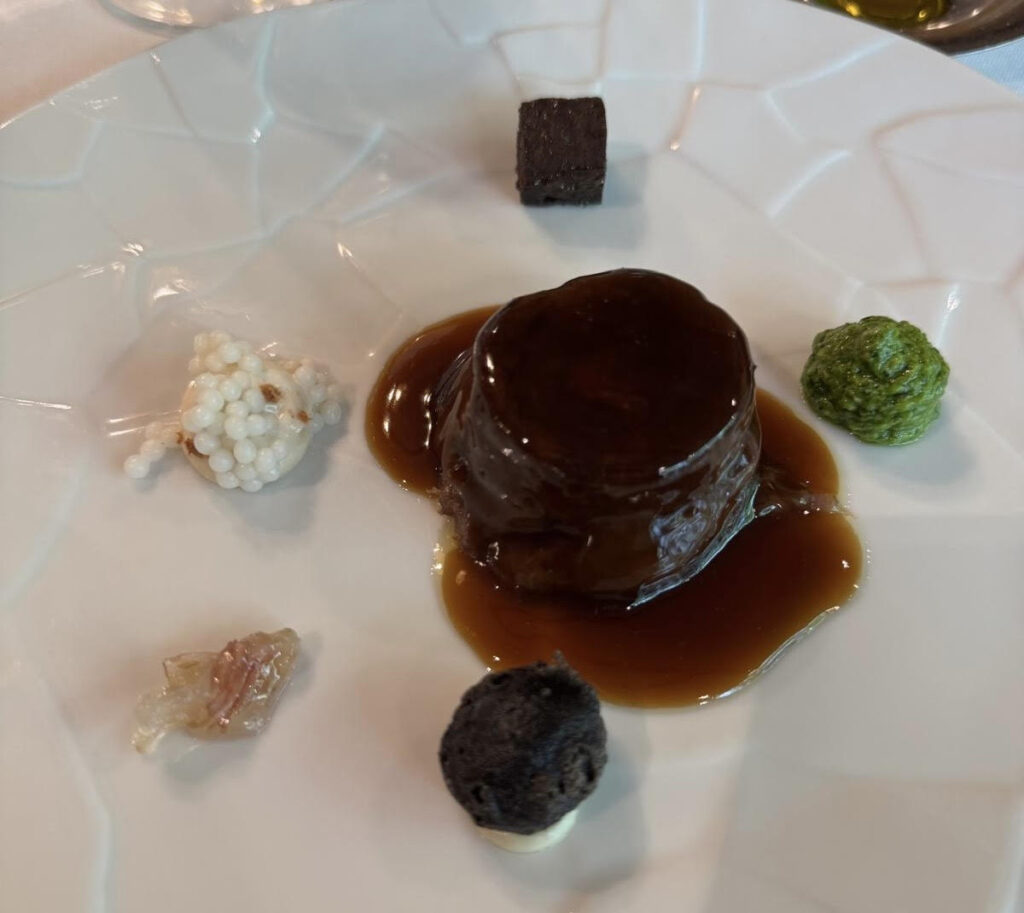
The thick gravy was very robust, and the meat was so tender you could easily cut it with a fork. The accoutrements were small but mighty: pepper pesto, ham caviar and morcilla. Overall, the meat was fantastic, but it didn’t get the shine it deserved.
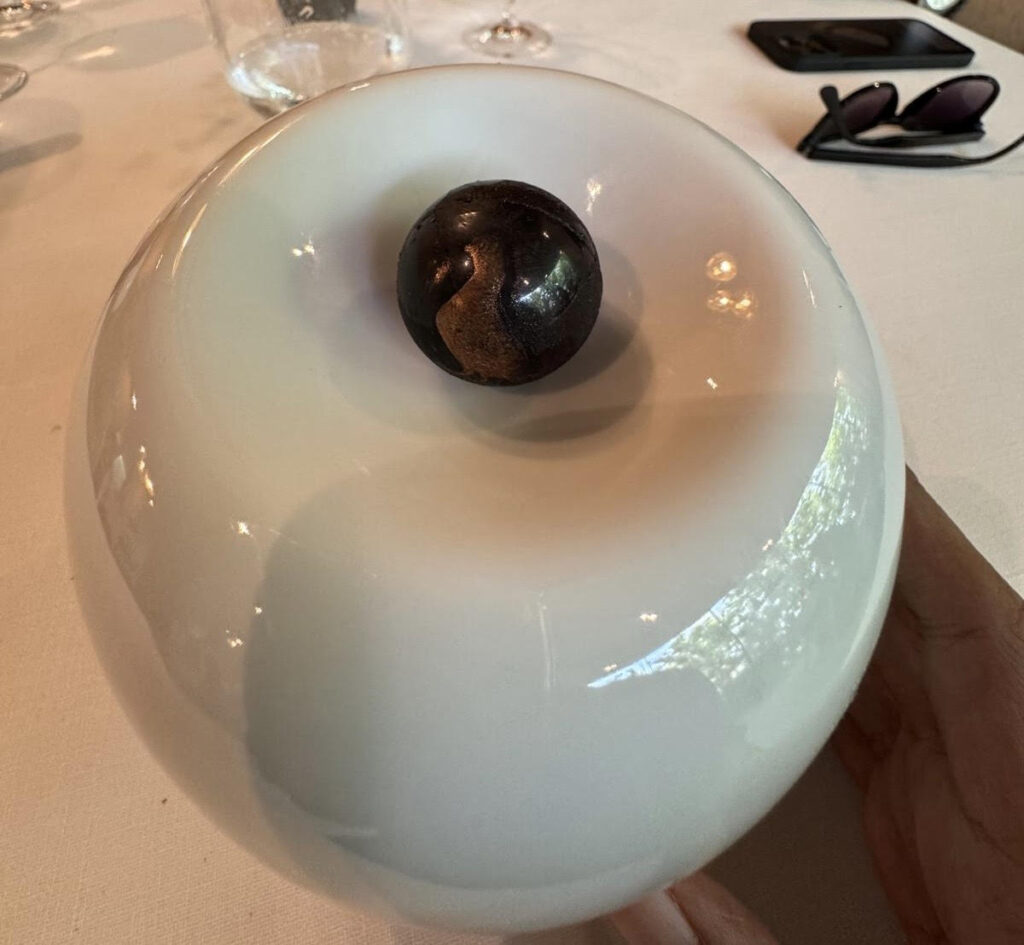
Lastly, we were served perdiz al chocolate, a partridge stew encased in a glossy, deep-colored chocolate sphere that popped into a savory liquid. It was an interesting combination, but I can’t say that I loved it.
Dessert
As we were nearing the end of the 28-course meal, the anticipation for dessert built up. I thought we were going to end this experience with a bang, but it fell short of expectations.
Our main dessert was yogurt with blueberry cream and fruits.
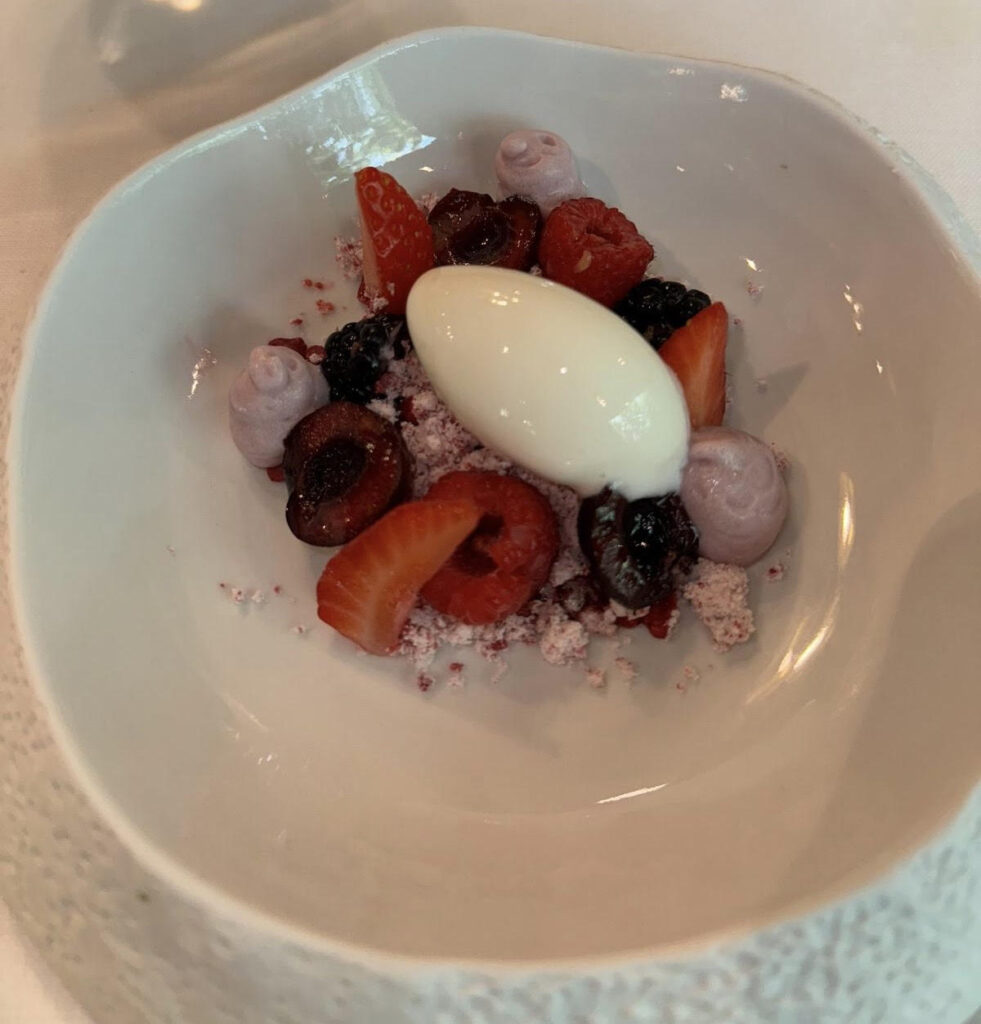
The scoop of yogurt was thick with a prominent dairy flavor. For such a highly renowned restaurant, I was expecting something that further showcased Eneko’s creative dexterity. Doubling down on the tartness, the pink specks were grilled yogurt, adding another layer of berry flavor.
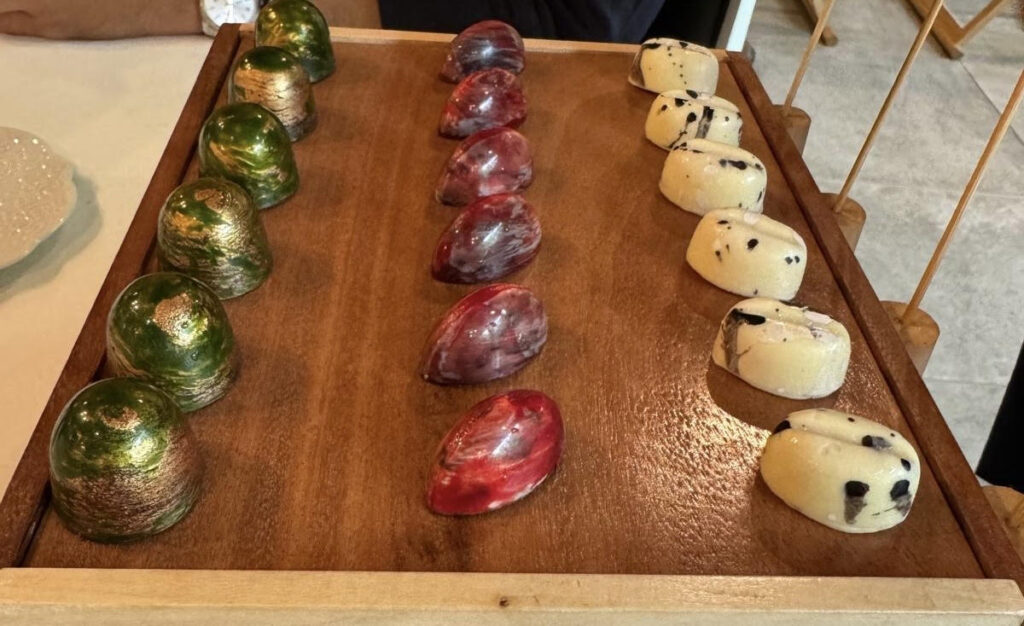
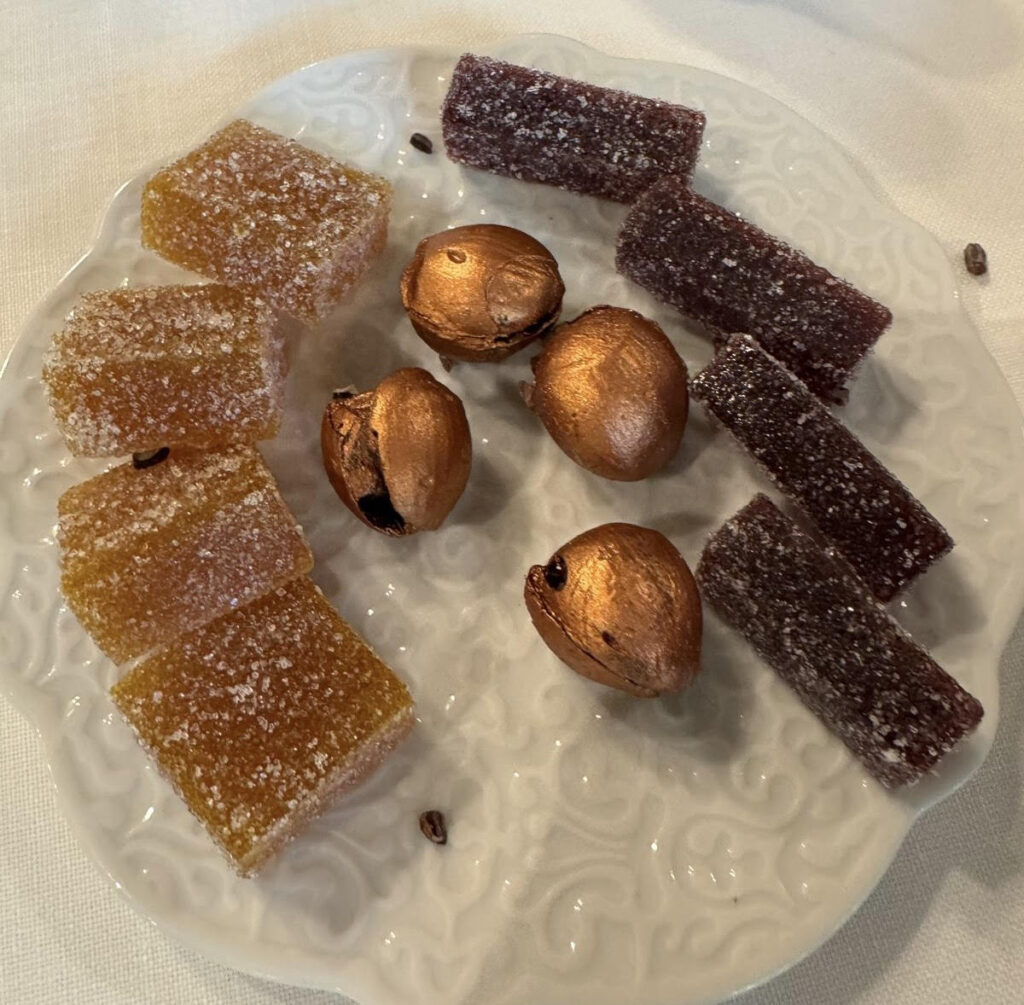
Our meal ended with an assortment of petits fours, including chocolates, fruit jellies, and macarons. An assortment of chocolates: dark, white and toffee – fruit jellies: mango with curry and raspberry – and macarons. Except for the white chocolate, the rest was too strong for my taste. I was not keen on the mango and curry combination jelly, the macarons were just ok, and as someone who eats dark chocolate on a regular basis, this one was too bitter for me. That being said, I really enjoyed the marble-like glossy exterior of the chocolates.
Overall thoughts
During this three-and-a-half-hour experience, the pace between courses flowed seamlessly. However, as the dining room started to fill up, some of the explanations felt either rushed or lacked clarity of speech.
I shared on my Instagram that although the food was incredible, the atmosphere felt straight out of a Black Mirror episode: futuristic and modern but cold.
I was sitting with a panoramic view of the open kitchen, where the frantic manager was coming in and out. The waiters were all gathered next to the kitchen door, speaking in hushed voices, almost whispering to each other.
Every time one of the waiters approached a table to give explanations, they were closely watched by the manager and staff members. At one point, I noticed someone roll their eyes at a young server who, I suspect, wasn’t supposed to approach a table to serve drinks just yet. The whole thing felt like a stage, and whenever you were being spoken to and served, the waiters were acting on cue. In the kitchen, a cook accidentally stumbled on the manager, who shot daggers at him.
Since this is a three-Michelin-starred restaurant, I can only imagine the pressure placed on the staff. Michelin stars are not set in stone, and restaurants can lose them at any time. Azurmendi has successfully held onto its three stars since the last one, which was awarded in 2012.
Overall, Azurmendi was not so much about the food per se, but rather the sensory experience from start to finish. As I was reading the reviews, some people commented that it felt a tad too performative, especially in the beginning. I think the presentation of some of the courses was superfluous, like the perdiz al chocolate on the opulent serving vessel, or the oyster, plated in a very heavy crystal glass. I also found the amount of chocolate served at the end excessive.
Although there were a few misses, the harmonious interplay between flavor, texture and artful presentations in most of the courses was beautifully executed. It’s no wonder that this, coupled with the sustainability aspect and stunning location, makes Azurmendi one of the most unique restaurants in the world.
If you want to experience fine Basque cuisine with a modern twist, Azurmendi will not disappoint. I’m so grateful to have been able to experience such a cutting-edge three Michelin-starred restaurant. But if I go back to the Basque Country, I can’t say I’m itching to go back. My dad shared the same thoughts. We really enjoyed it, but it was a one-off experience for us.
Azurmendi: Website and Instagram